The Intelligence Between Us
Not expertise as performance.
Not knowledge hardened into authority.
But expertise as permeability.
The ability to remain intellectually porous even after years of practice. To let context, ecology, culture, memory and contradiction continue reshaping the way you think. To resist the instinct to dominate complexity simply because you recognise parts of it.
Reflections from Arup Design School
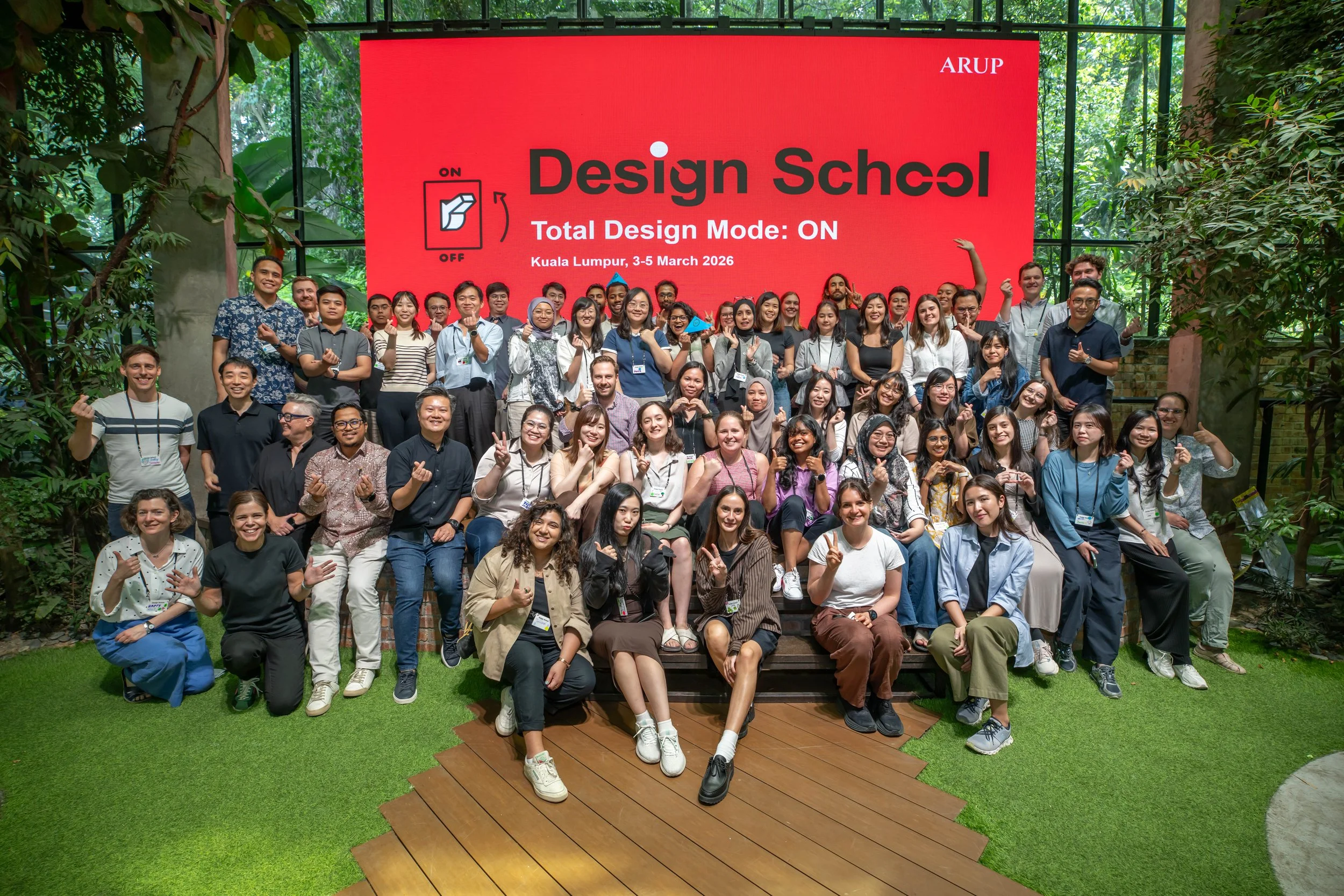
In March 2026, I was fortunate to be selected to attend APAC's Arup Design School in Kuala Lumpur, Malaysia.
Each year, a small cohort of people from across the business come together to explore a different theme relevant to the future of design and the practice of our work. In 2026, that theme was Total Design.
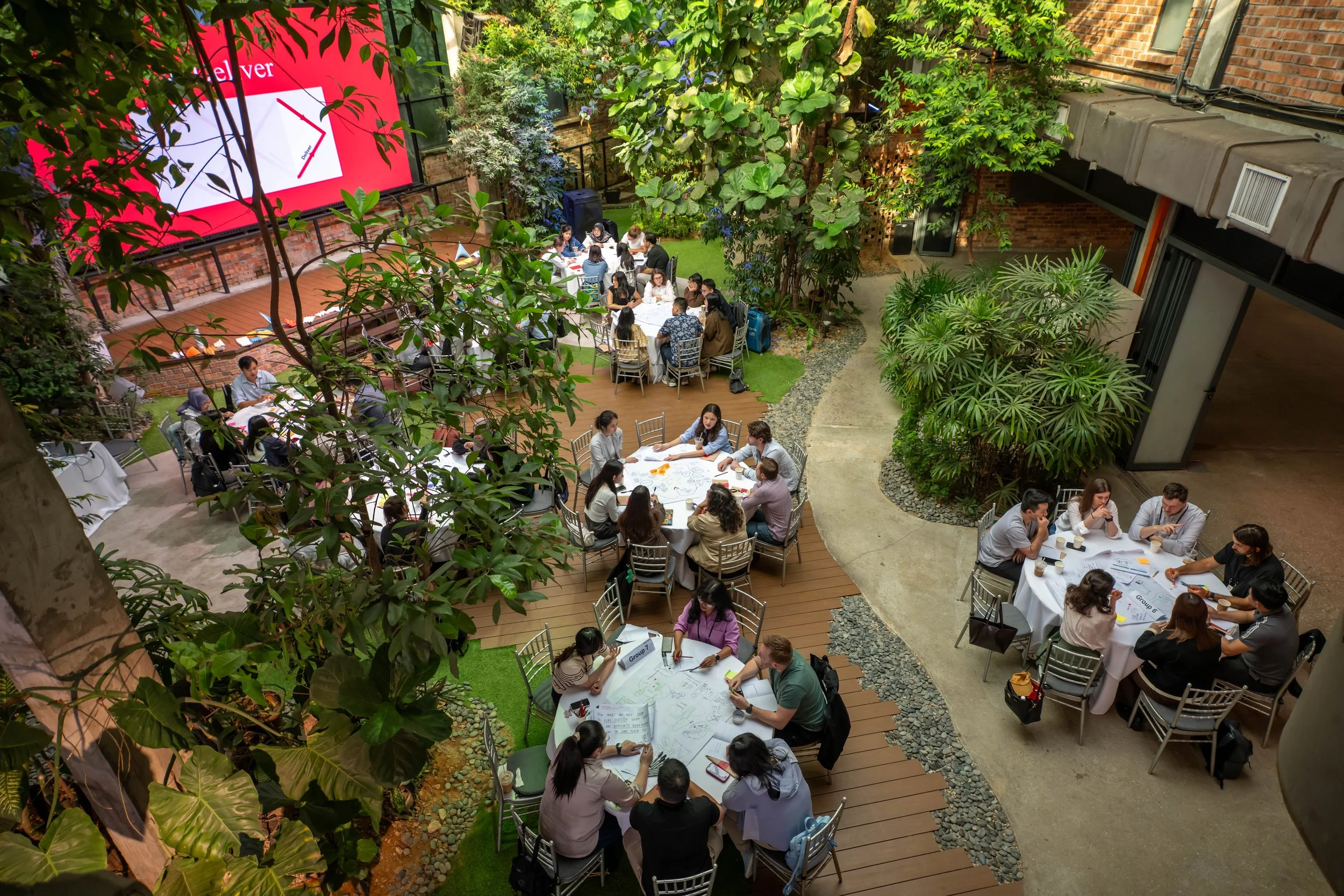
Held over several days in Kuala Lumpur, the program brought together engineers, planners, economists, designers and strategists from across the Asia-Pacific region, each contributing different expertise, perspectives and ways of understanding the world.
Through presentations, workshops and discussion, participants were encouraged to consider projects within their broader social, environmental, economic, cultural and technical contexts, and to explore how different disciplines can work together to address complex challenges.
The reflections that follow are drawn from that experience.
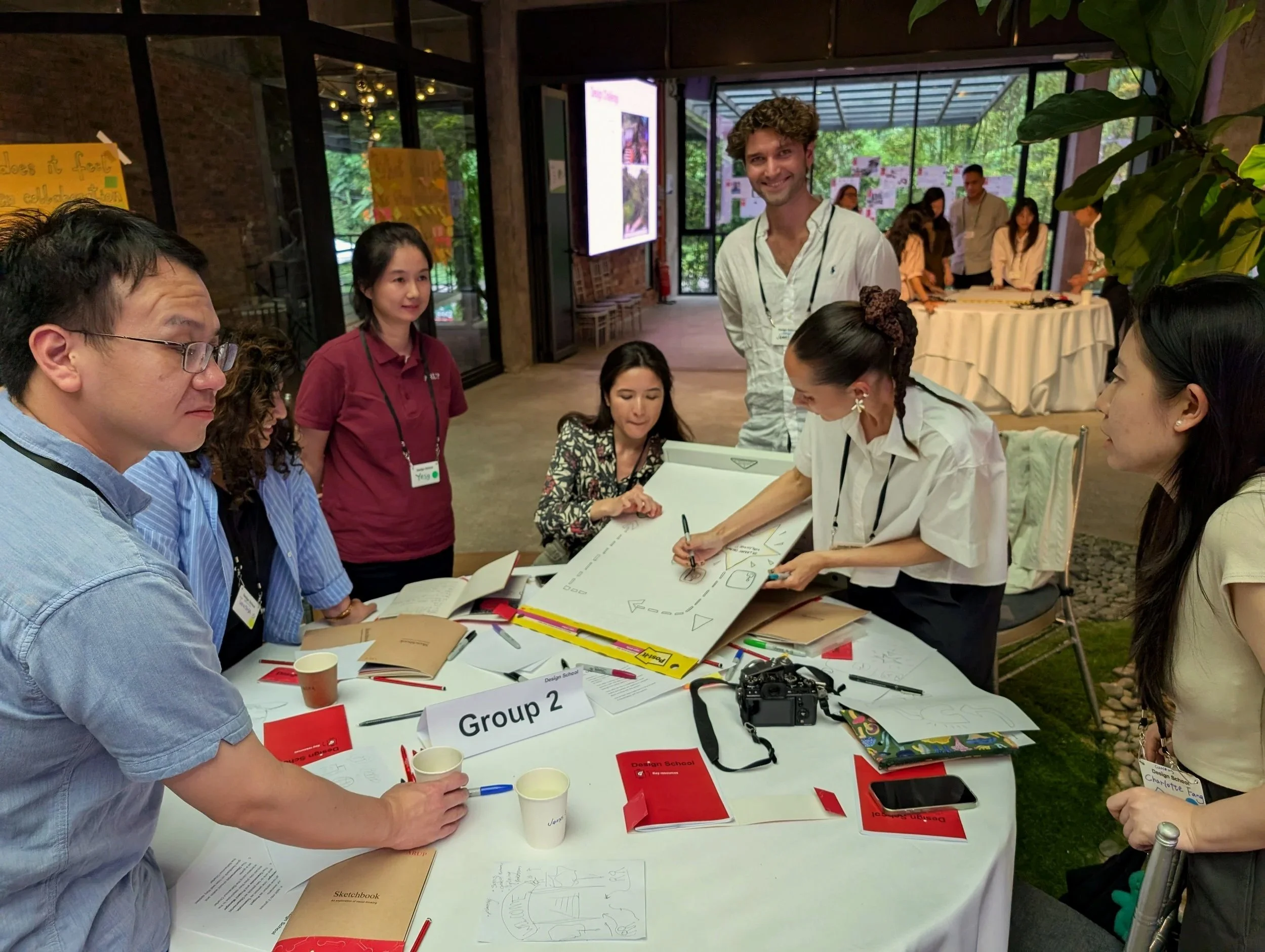
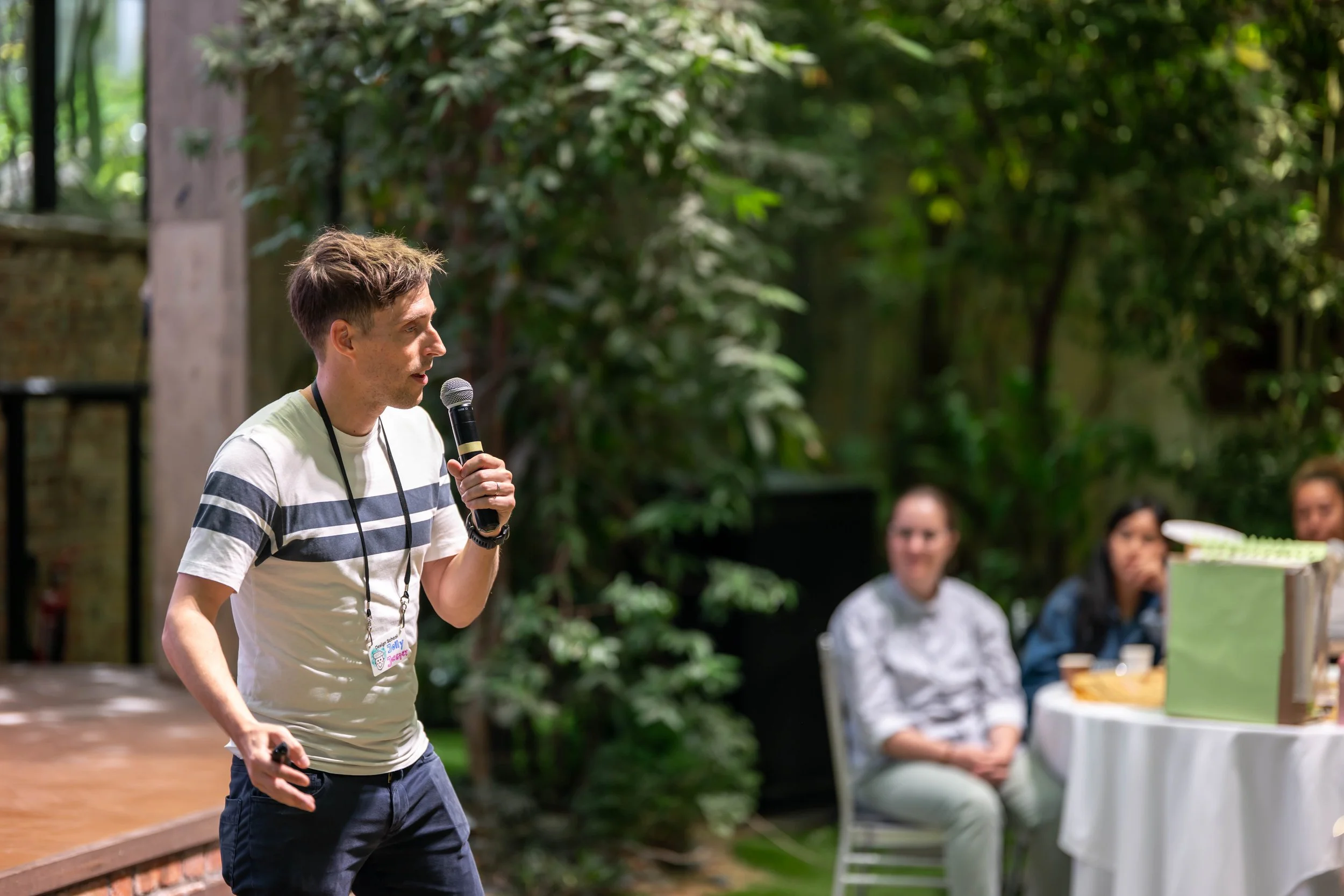
Image: Arup Design School, Andy Leong Photography
Prologue
We often speak about learning as though it arrives complete.
A lesson delivered. An insight acquired. A framework carried neatly back into practice.
Yet some forms of learning resist that kind of containment.
They continue unfolding long after the formalities end, quietly altering what we notice, what we question and where our attention settles.
This is not a reflection on Arup Design School.
At least, not entirely.
Inside the Room, Inside my Mind
For months, I avoided writing about Arup Design School.
Every attempt arrived too early.
Too clean. Too resolved. Too eager to transform something living into a sequence of insights, frameworks and digestible professional reflection.
Some experiences resist immediate language. They continue unfurling long after the formalities end, rearranging your thinking slowly, invisibly, like groundwater sifting through stone.
I attended the program back in March. Since then, fragments keep returning to me at unexpected moments. A residue left to decompose and metamorphose within my brain.
I remember the atmosphere more clearly than the presentations.
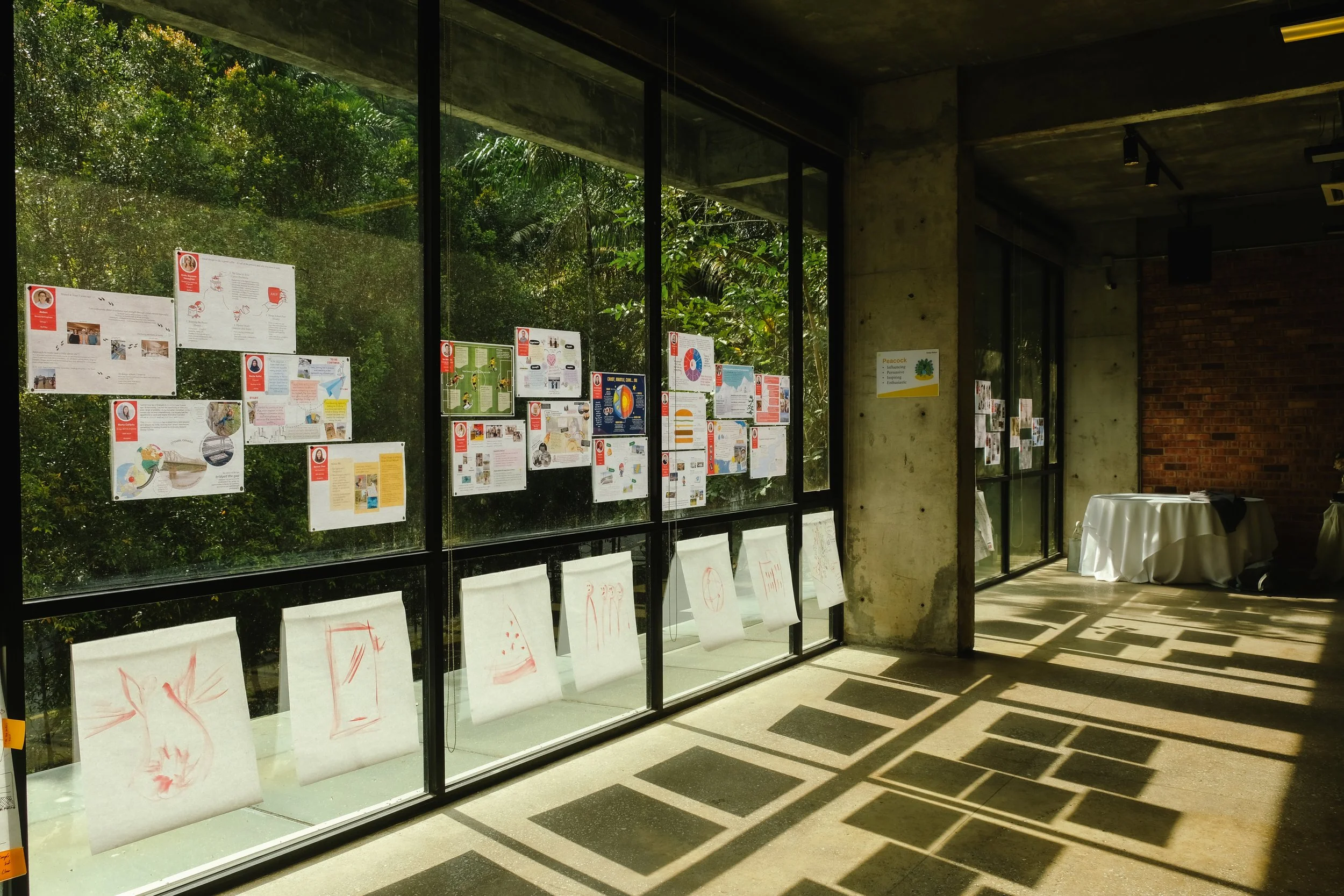
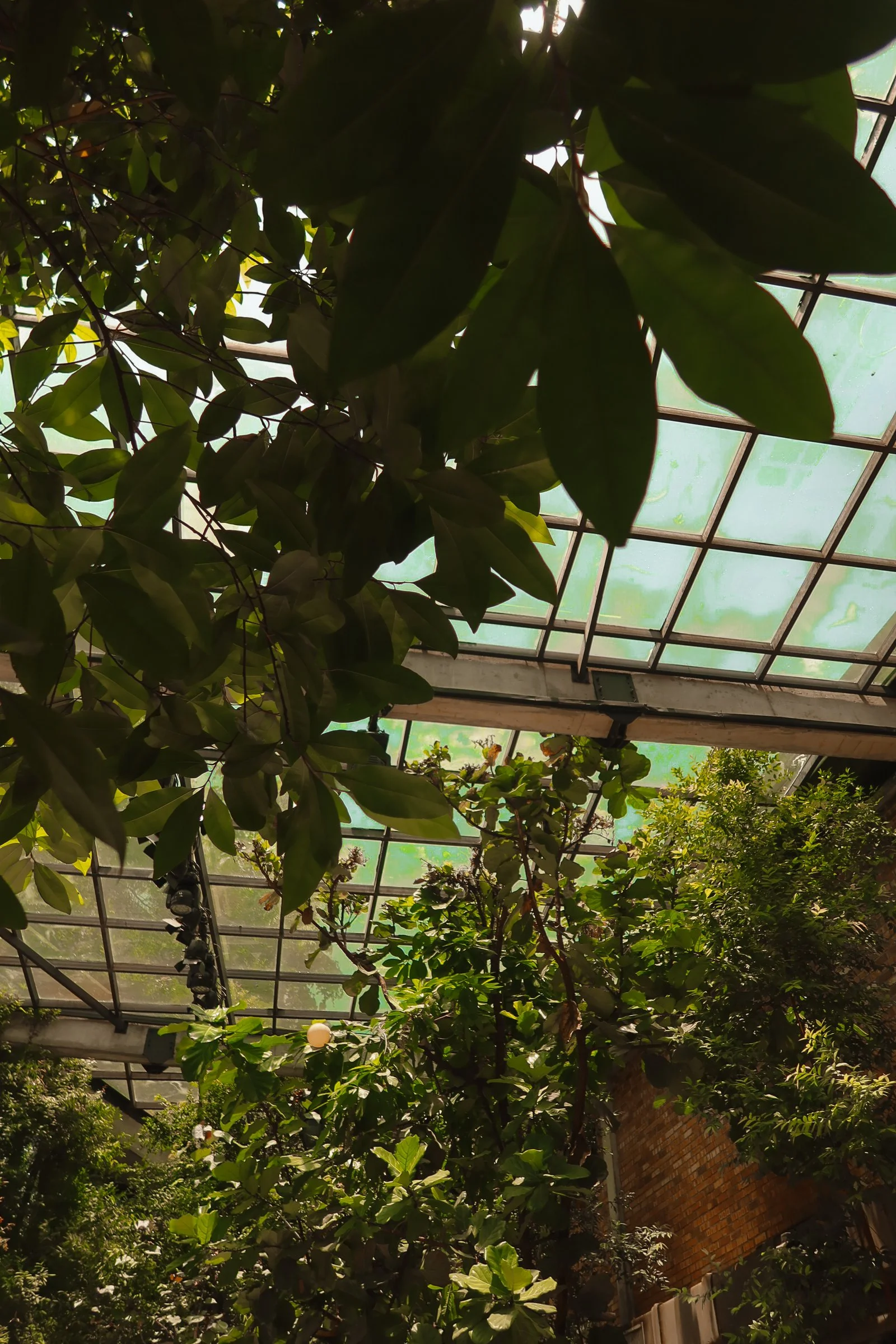
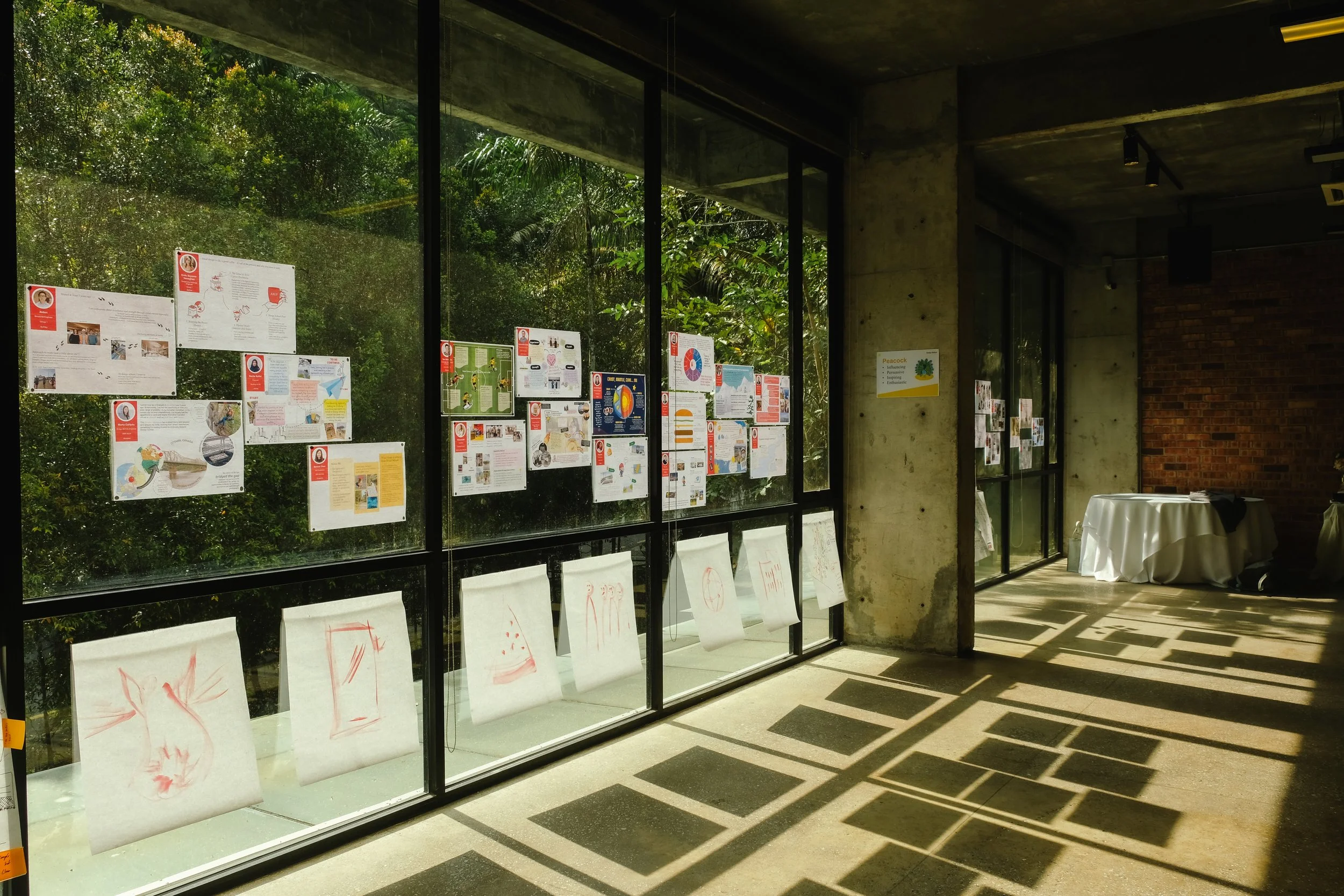
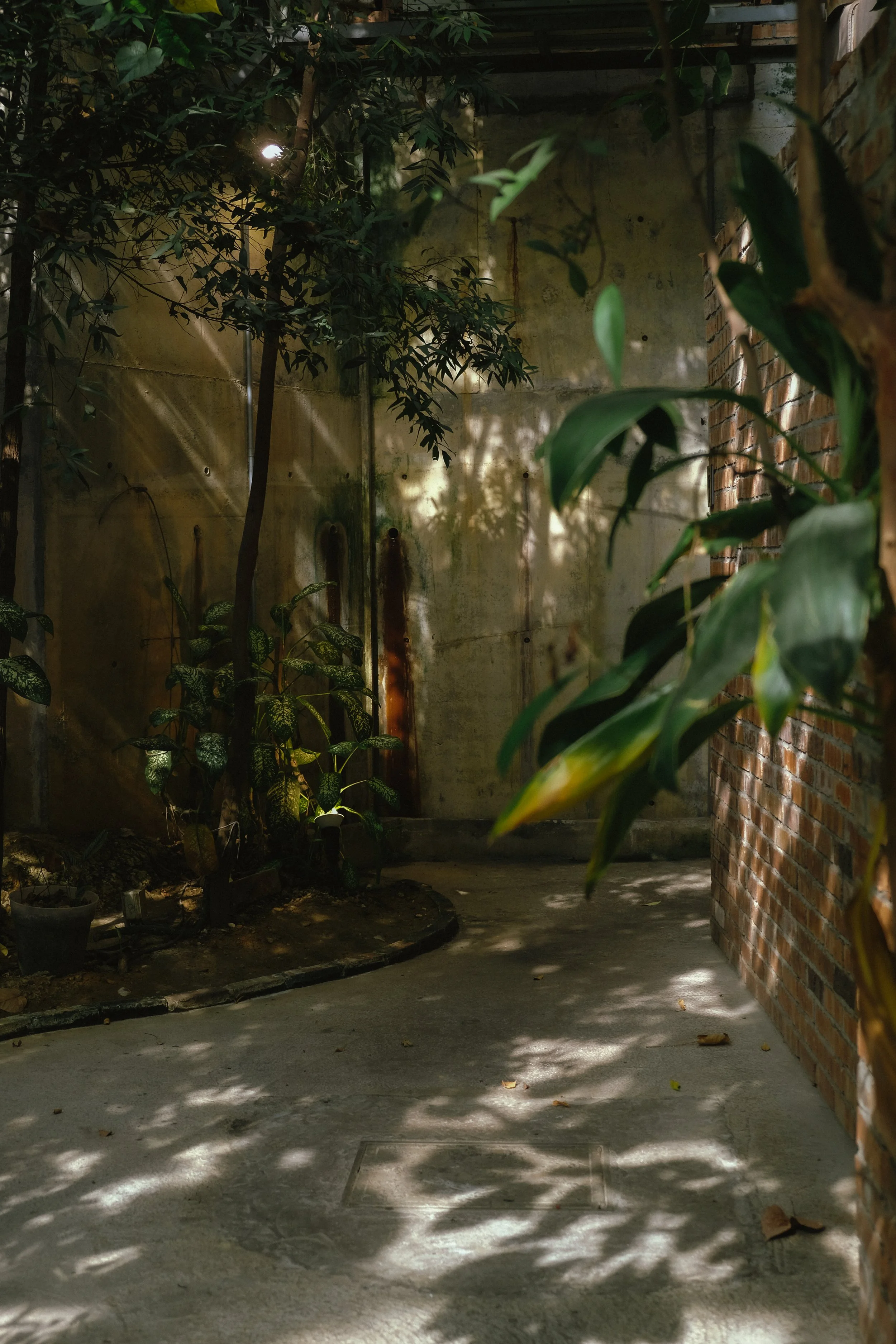
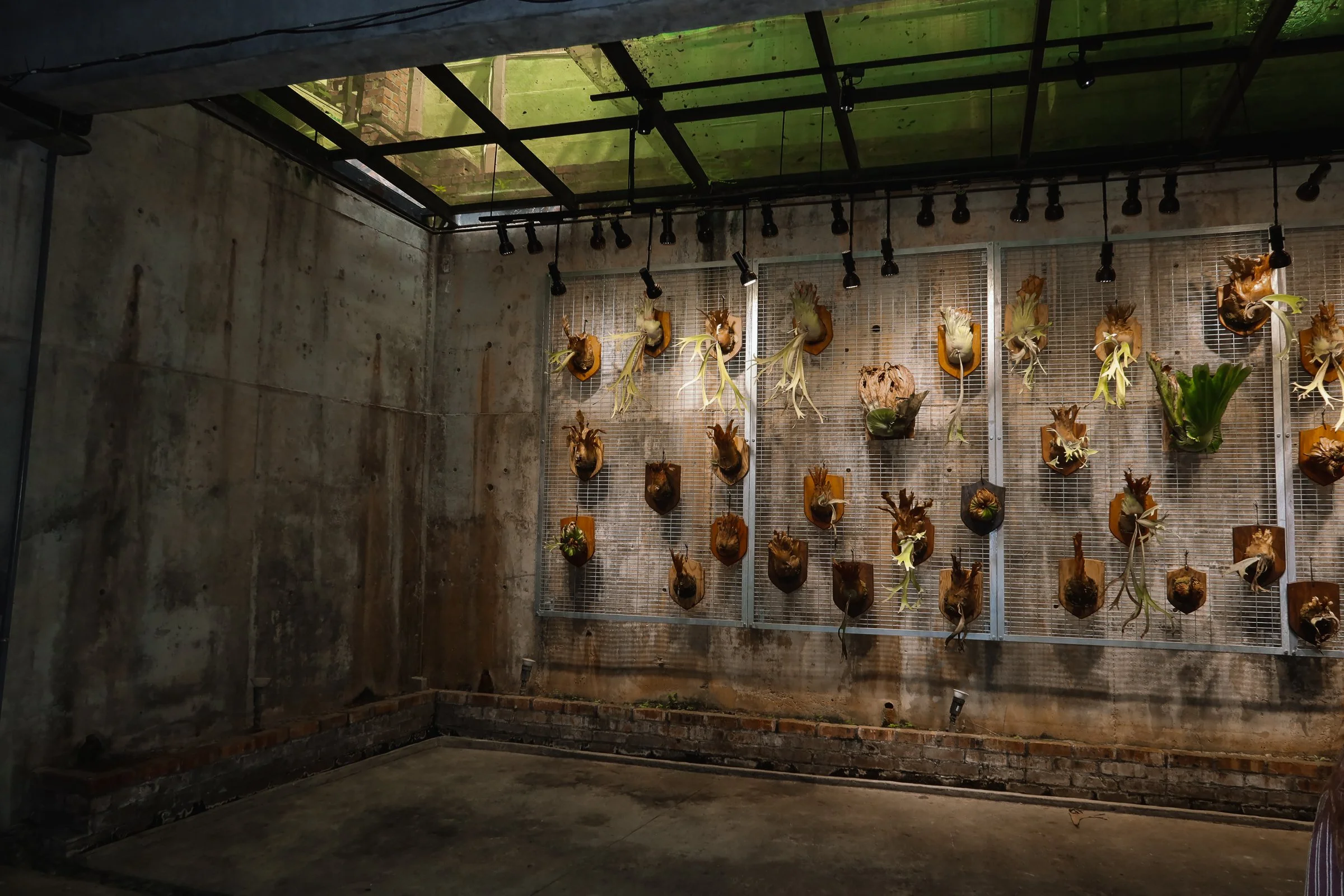
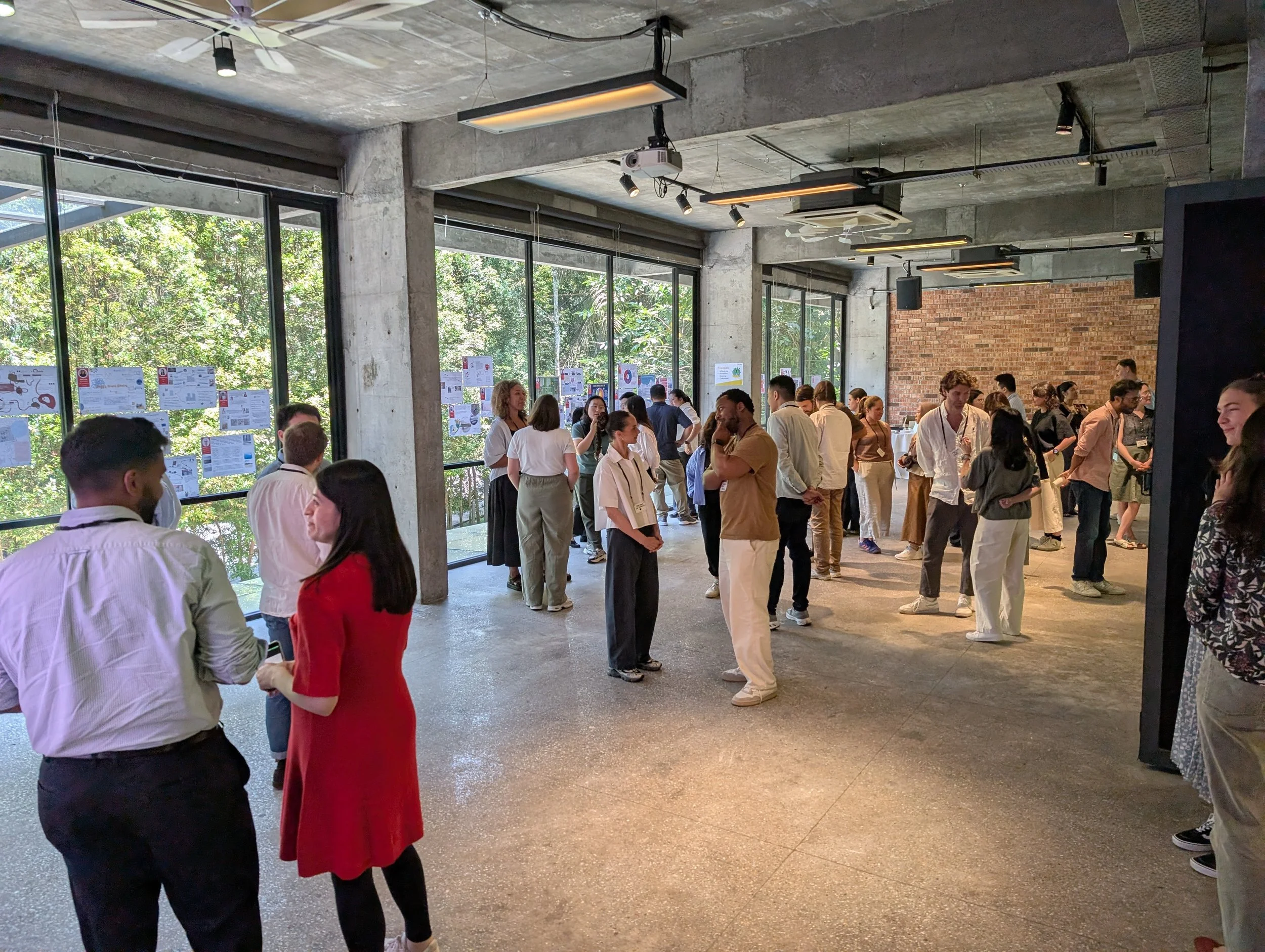
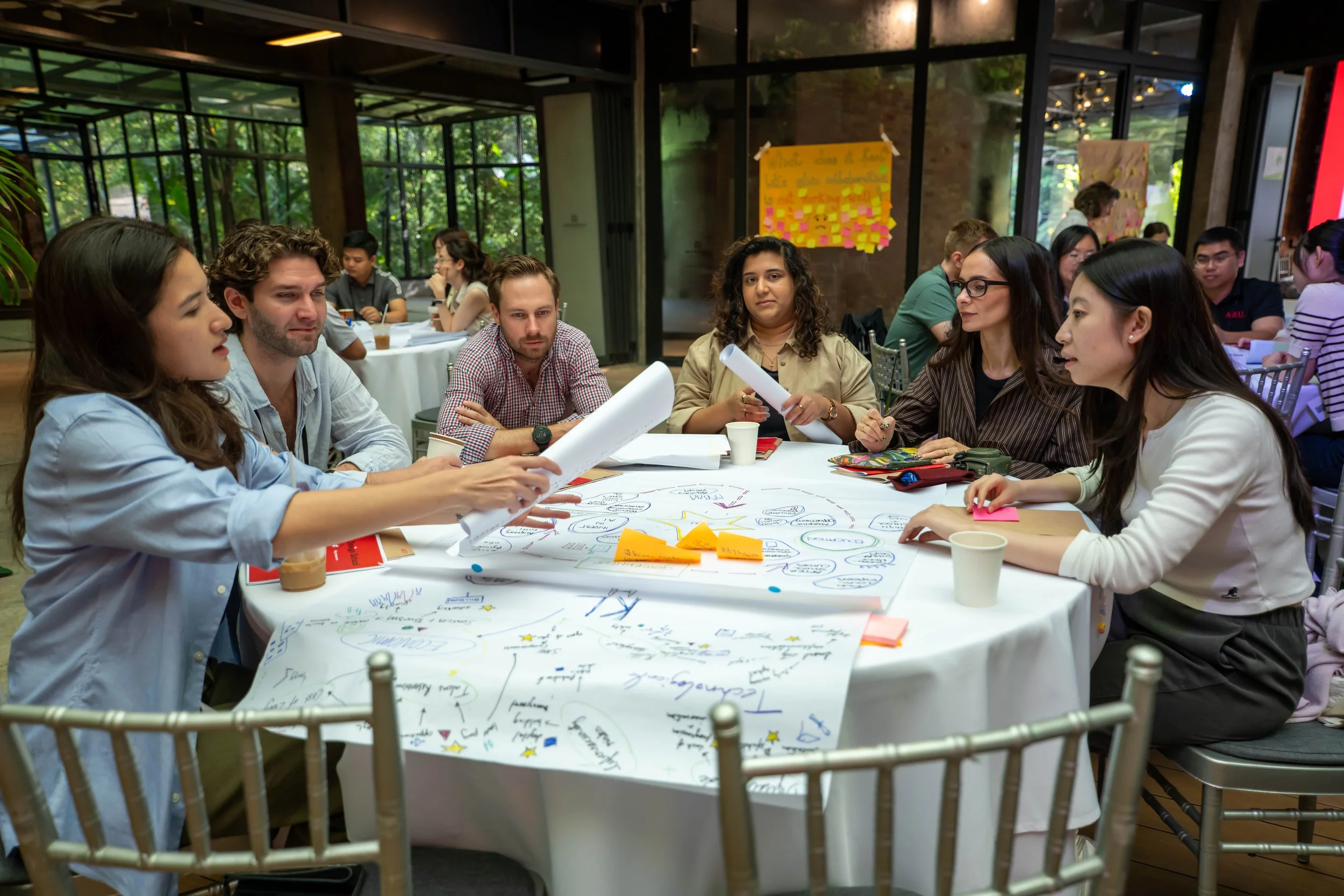
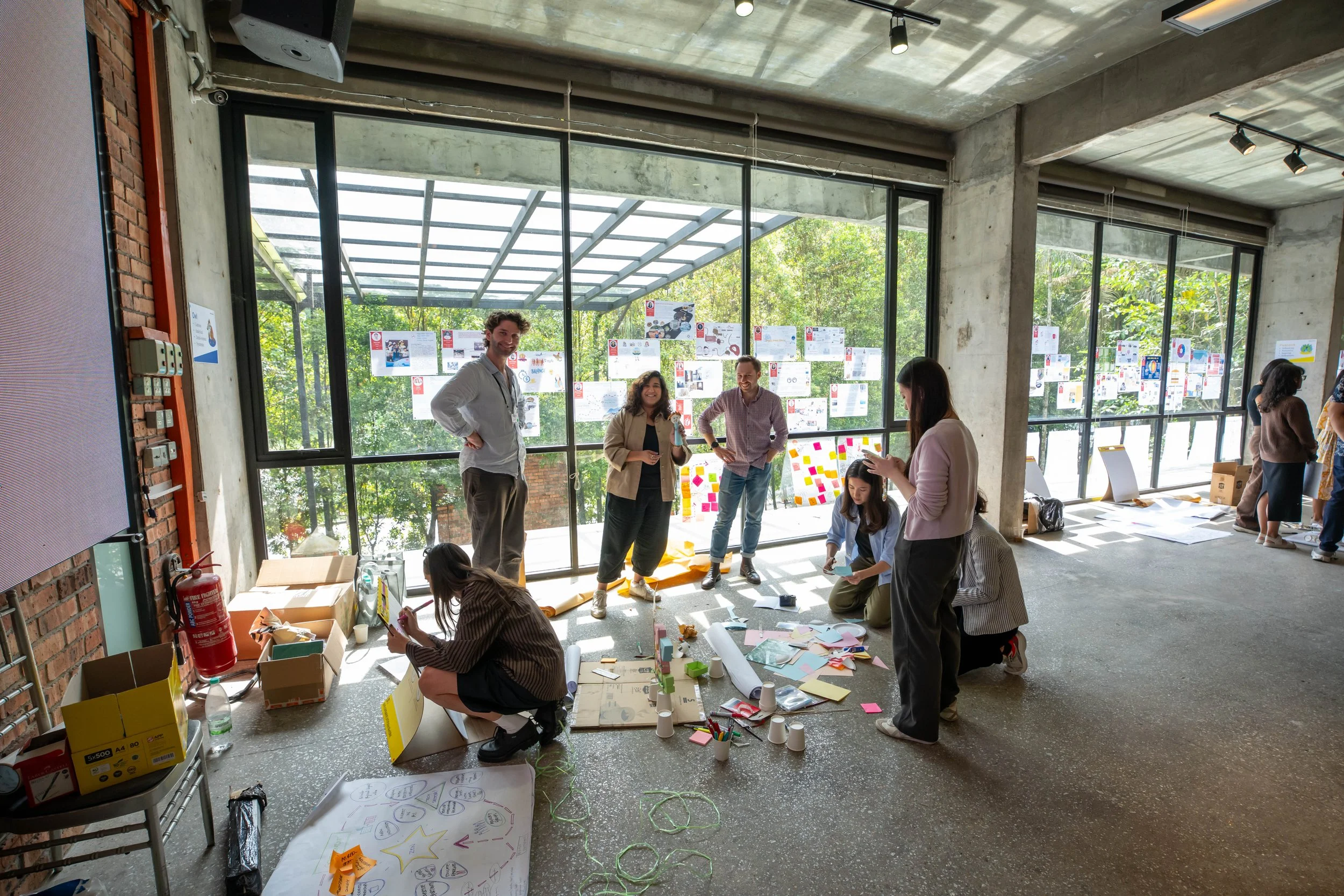
Condensation gathering against glass by late afternoon. Sheets of butcher’s paper layered with systems maps and hurried arrows, every problem branching endlessly into another. Tropical foliage pressing against concrete walls. Strangers sitting in circles beneath shifting bands of light, speaking carefully around complexity as though trying not to disturb it too quickly.
The strange intimacy of watching highly intelligent people abandon the performance of certainty.
Especially in design.
Especially inside industries shaped by expertise.
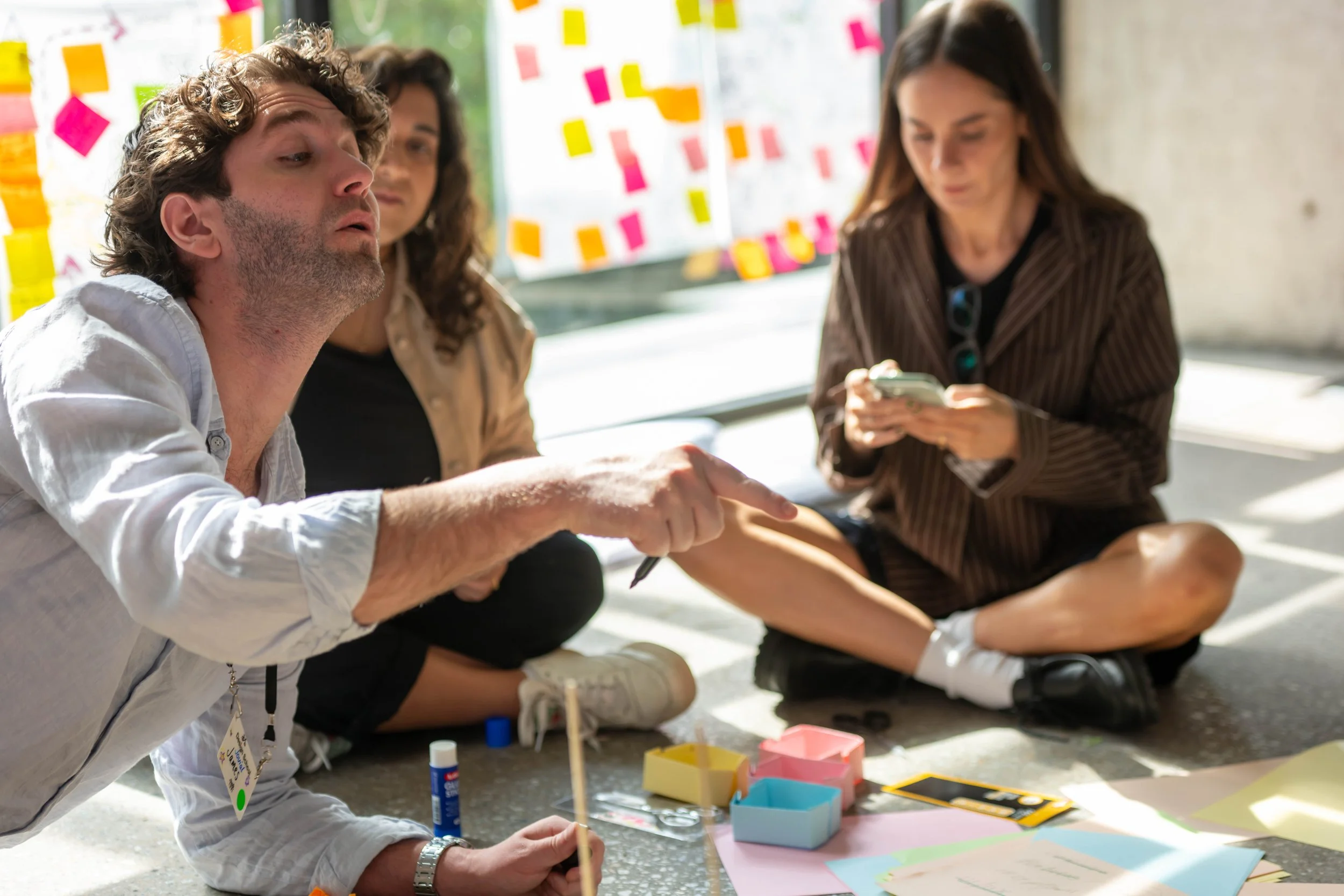
Ideas moved unpredictably through the room. Between engineers, strategists, landscape architects, economists, storytellers. No single person ever seemed to fully own them. Thoughts accumulated collectively, attaching themselves to other thoughts, changing shape as they travelled. By the end of the week, it was impossible to trace where anything had begun.
That stayed with me. It felt unusually honest.
I entered Design School believing collaboration was primarily procedural. Shared language. Coordination. Alignment. A structure for moving work forward across disciplines with greater clarity and less friction.
But somewhere inside those conversations, that understanding began to loosen.
What if meaningful collaboration is not procedural at all?
What if it could be more emotional? What if it should be?
Not emotional in the sentimental sense. Emotional in the infrastructural sense. Trust. Timing. Generosity. The willingness to remain open long enough for another person’s thinking to genuinely alter your own.
That kind of openness sounds simple until you encounter it in practice.
Because in practice, professional environments reward the appearance of knowing. Fast answers. Defensible positions. Clean authorship. The ability to compress uncertainty into confidence before anyone notices the complexity underneath.
The people who imprinted on me the most from Design School were rarely the most certain people in the room.
They were the ones asking careful questions without immediately reaching for resolution. The ones capable of holding ambiguity a little longer. The ones who understood that curiosity is not the absence of expertise, but perhaps expertise itself.
Not expertise as performance.
Not knowledge hardened into authority.
But expertise as permeability.
The ability to remain intellectually porous even after years of practice. To let context, ecology, culture, memory and contradiction continue reshaping the way you think. To resist the instinct to dominate complexity simply because you recognise parts of it.
Months later, I suspect what mattered most was never written on the workshop walls at all.
It was that rigour is not the opposite of softness.
It was that listening is not passive.
It was that some of the most important forms of design intelligence emerge not through control, but through sustained attention. Through remaining present long enough for relationships to reveal themselves properly. Through realising that complexity is not something to compress, but something to sit with.
I think about this often now.
The Illusion of Separation
We were asked to map a problem that initially appeared straightforward.
Within minutes, the paper became almost unreadable.
Arrows crossing over arrows. Economic pressures entangled with ecological systems. Political decisions colliding with public behaviour. Cultural memory shaping infrastructure outcomes decades later. Every attempt to isolate a single issue only revealed another system beneath it, then another beneath that.
At some point, looking down at the page disappearing beneath layers of interconnection, I found myself thinking:
Nothing exists in isolation.
As a landscape architect, this was not new knowledge. Landscape architecture has always required a sensitivity to interdependence. Water influencing vegetation. Vegetation influencing temperature. Temperature influencing behaviour. Soil conditions shaping ecosystems long before any built intervention arrives. Even the placement of a path alters movement, perception, erosion, ecology, habitat.
To work in landscape is to work within relationships.
Sitting in that room, the thought began to stretch.
The systems we were mapping were not only ecological, but social, political, emotional and economic. Human systems colliding with environmental ones. Layers of consequence folding into one another faster than the page could contain them. It no longer felt possible to separate a site from governance, or infrastructure from memory, or storytelling from public trust.
The scale of entanglement became briefly visible.
Not theoretically. Physically.
Marker ink bleeding through paper while fifty-three people attempted to trace the movement of influence across time, geography, behaviour, policy and design. No clear beginning. No clean edge between one system and the next.
Only relationships.
Design often depends on the illusion of separation.
A flood mitigation project becomes hydraulic. A transport corridor becomes logistical. A landscape becomes aesthetic. A community becomes demographic data.
Complexity is divided into manageable territories. Not because the boundaries are real, but because they make the work feel possible.
Looking down at the paper, those boundaries became harder to locate.
The lines kept crossing them.
Ecology entered governance. Infrastructure entered memory. Behaviour entered policy.
Nothing appeared purely technical anymore.
Every decision enters other systems the moment it is made.
Social systems. Political systems. Ecological systems. Emotional ones.
Consequences moving across timescales far beyond the lifespan of any individual project.
And designers move through those systems too.
Not as observers standing outside complexity, but as participants within it.
Professional expertise often encourages a kind of perceptual narrowing. You become highly skilled at identifying the dimensions of a problem you already understand, while unconsciously filtering out the rest. The longer you practise, the easier it becomes to mistake familiarity for completeness.
Design School interrupted that instinct repeatedly.
Not through revelation, but through accumulation.
Conversations that resisted resolution. Disagreements that opened rather than closed possibilities. Economists, engineers, strategists, and designers circling the same problem from different positions, each noticing something invisible to the others.
Gradually, the limits of individual perception became harder to avoid.
Strangely, that felt relieving.
Because beneath so much of professional culture sits the quiet pressure to appear resolved. Certain. Coherent. To move quickly towards answers before uncertainty becomes visible.
Some forms of understanding only emerge once certainty begins to loosen.
Sometimes the scale of a problem becomes large enough that no single perspective can comfortably contain it.
The complexity is no longer linear.
I guess it never was.
That has stayed with me.
Home
I knew I had to carry these thoughts into practice.
Not as a methodology.
As a way of seeing.
Once noticed, it became difficult to ignore.
A transport corridor is never only transport. Ecology enters infrastructure. Behaviour enters policy. Memory enters place. Community trust shapes outcomes long before construction begins.
The relationships continue long after the drawings end.
I realise now that they always did. Thanks Design School.
This is where I began to understand the deeper value of Arup's interdisciplinary culture.
And perhaps, for the first time, what Total Design means beyond the language used to describe it.
Not a badge.
Not a methodology.
Not even a structure.
A recognition that no meaningful problem exists in isolation.
That every project is a meeting point between systems already shaping one another.
That complexity does not disappear when we divide it. It simply becomes harder to see.
There is something quietly radical in that.
Collaboration is not easy. Often it is slow, uncomfortable and unresolved. It asks us to remain open a little longer than feels professionally comfortable.
But when it works, something extraordinary happens.
The intelligence is no longer residing within individuals.
It begins emerging between them.
Between disciplines.
Between conversations.
Between different ways of understanding the same problem.
I watched this happen repeatedly throughout the week.
An economist noticing something a designer could not.
An engineer identifying a pattern invisible to a strategist.
A landscape architect carrying a question that quietly altered the direction of a conversation.
Ideas moving between people.
Changing shape as they travelled.
Perhaps that was the point.
That has stayed with me.
And so too have the people.
Not in the temporary way that conferences tend to manufacture connection, but through something slower and less tangible.
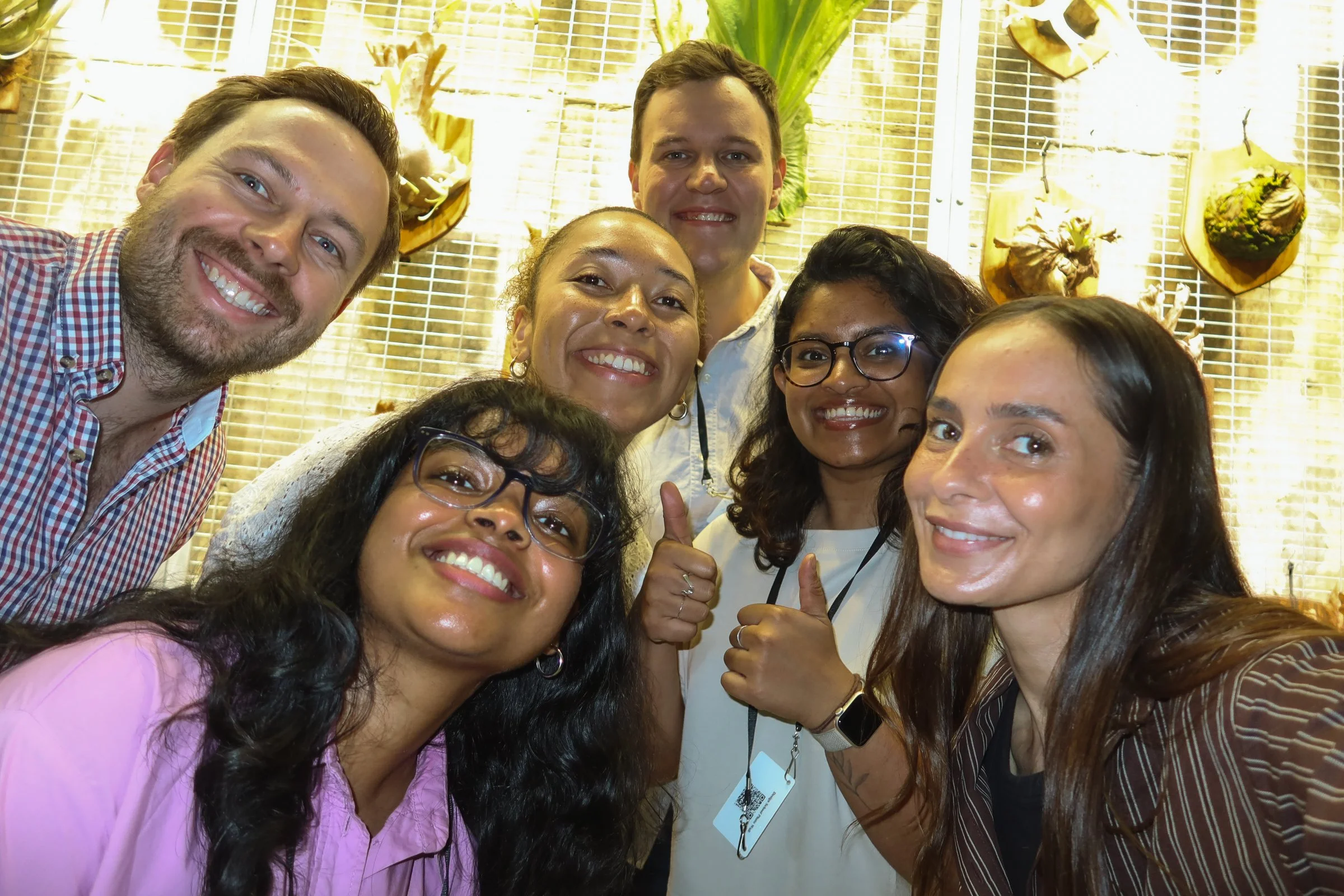
There is a closeness that forms when people spend days thinking openly beside one another. Not presenting polished versions of themselves but grappling publicly with uncertainty. Admitting blind spots. Changing their minds mid-conversation. Letting ideas remain unfinished.
The formality dissolved.
Conversations drifted effortlessly between disciplines. They moved collectively through the room, accumulating shape as they travelled.
Projects are typically remembered through outcomes.
Deliverables.
Deadlines.
Infrastructure photographed once the construction dust settles.
But I now suspect that the most important parts of practice are often the least visible.
The conversation that alters a project before anything is drawn. The pause before consensus.
The trust that allows disagreement to sharpen thinking rather than shut it down.
The willingness to let a question remain open long enough for a better answer to emerge.
Those things just don’t feature in project summaries.
And yet they may determine whether meaningful work becomes possible at all.
It is within this realisation that I begin to comprehend the true value of Arup Design School.
Not simply that it teaches methodologies or frameworks.
But that it creates the conditions for a different way of practising.
Less territorial.
Less performative.
More curious.
More permeable.
Months later, what remains with me most clearly is the feeling of a room full of people thinking carefully together.
Humidity gathering against glass.
Marker ink bleeding through butcher's paper.
Continued conversations.
I entered Design School expecting new tools.
I left with a different relationship to attention.
Less as the act of imposing clarity onto the world.
More as the practice of noticing the relationships already shaping it.
I think this may be one of the most important responsibilities of design.
Not to simplify complexity.
This will stay with me.
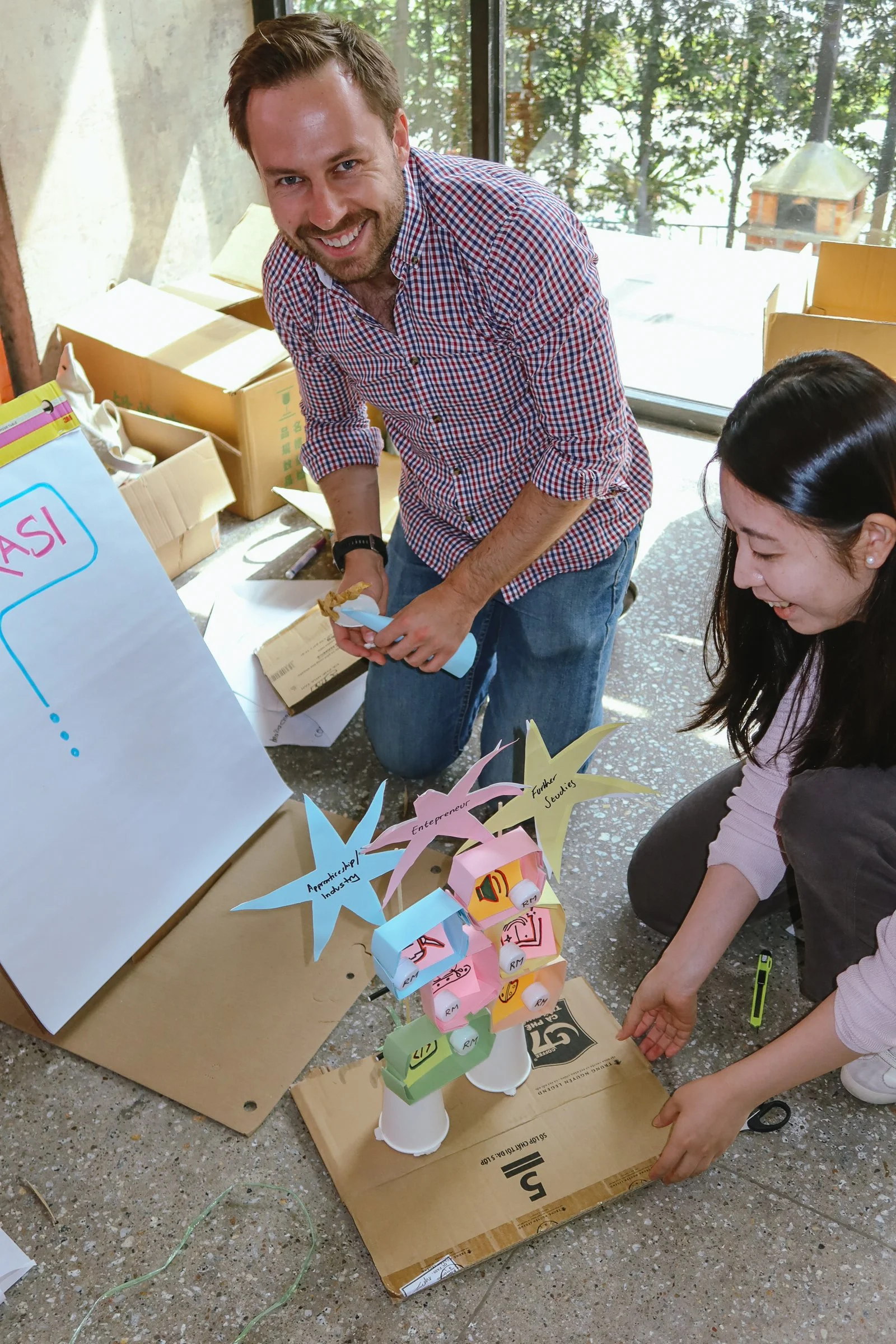
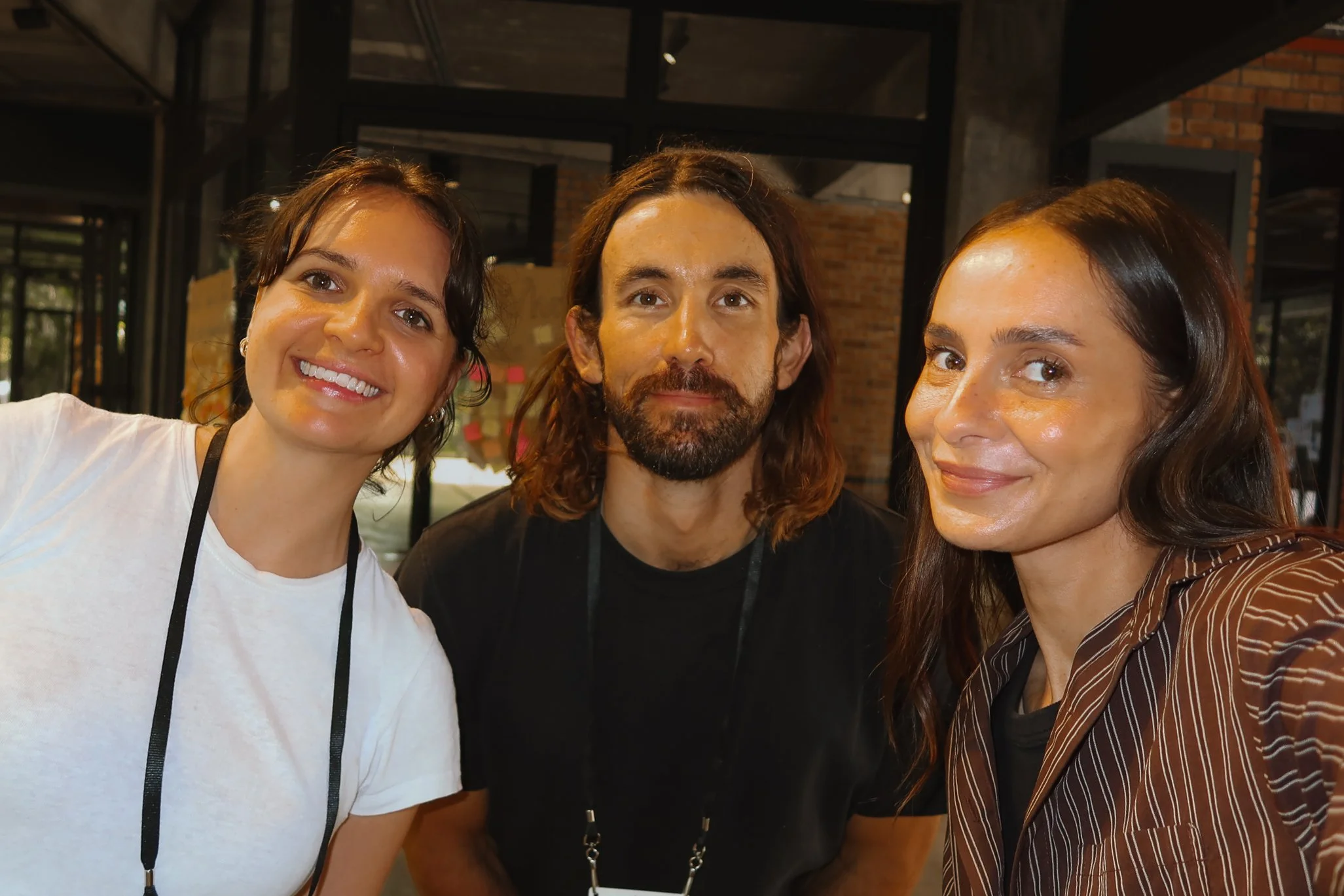
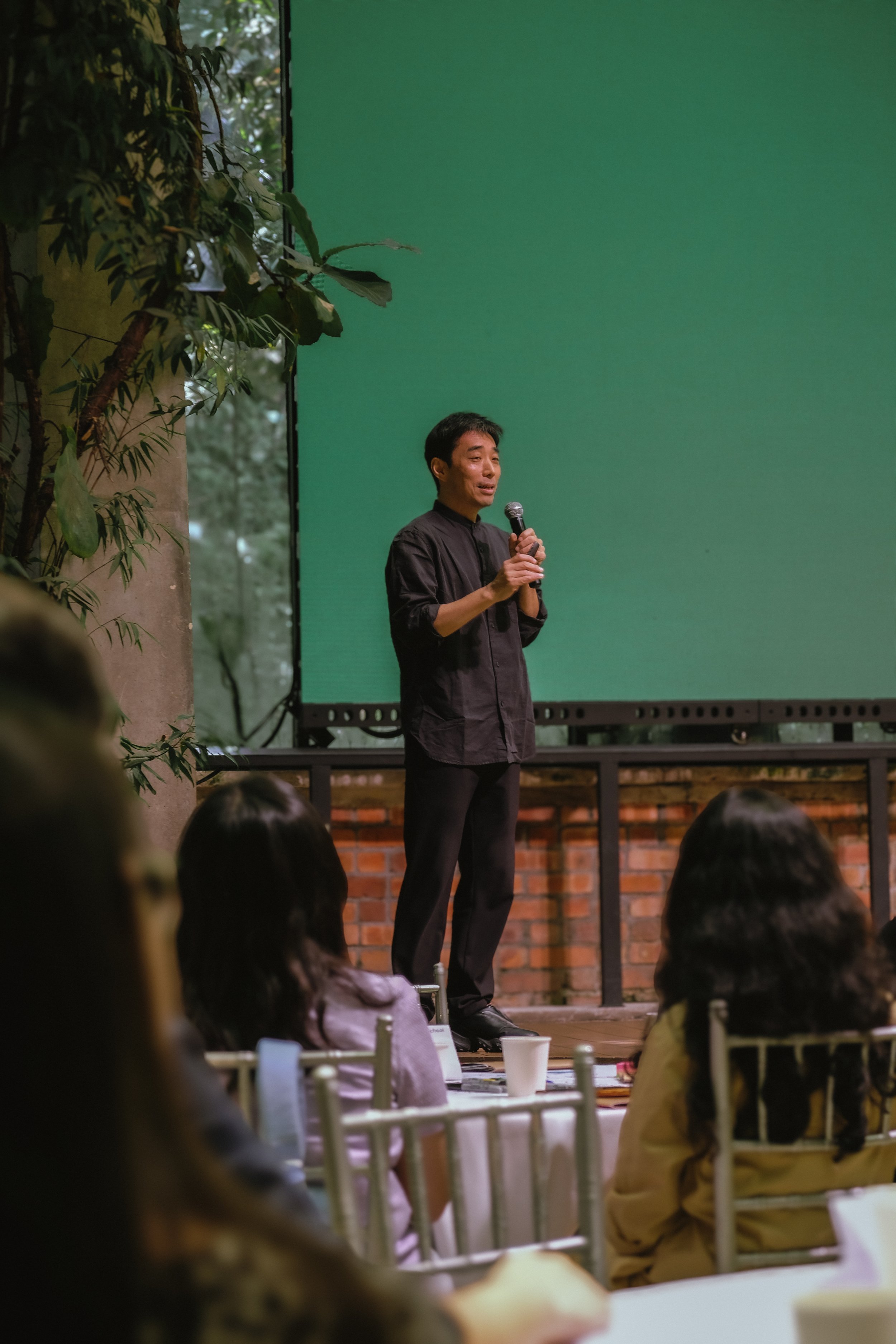
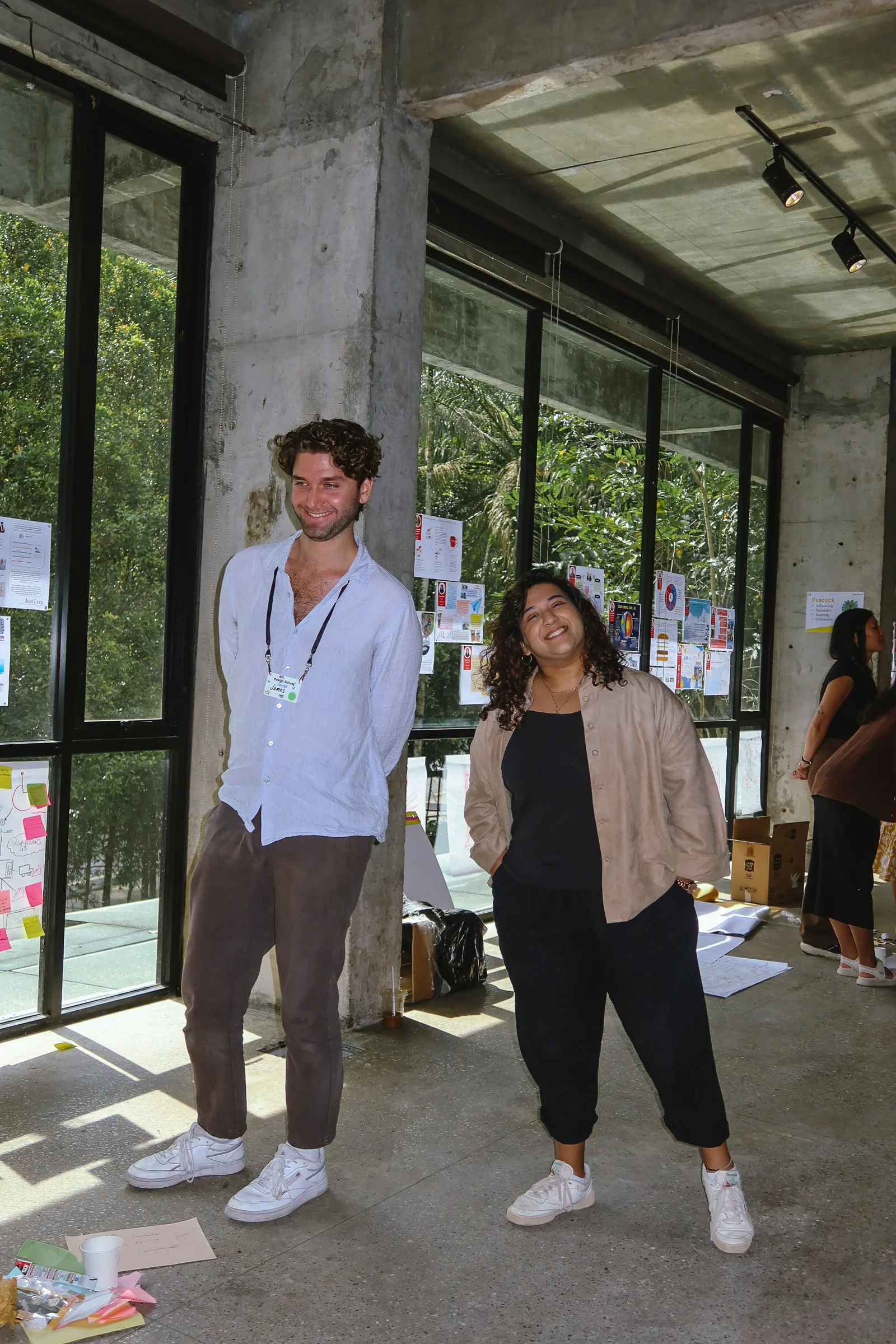
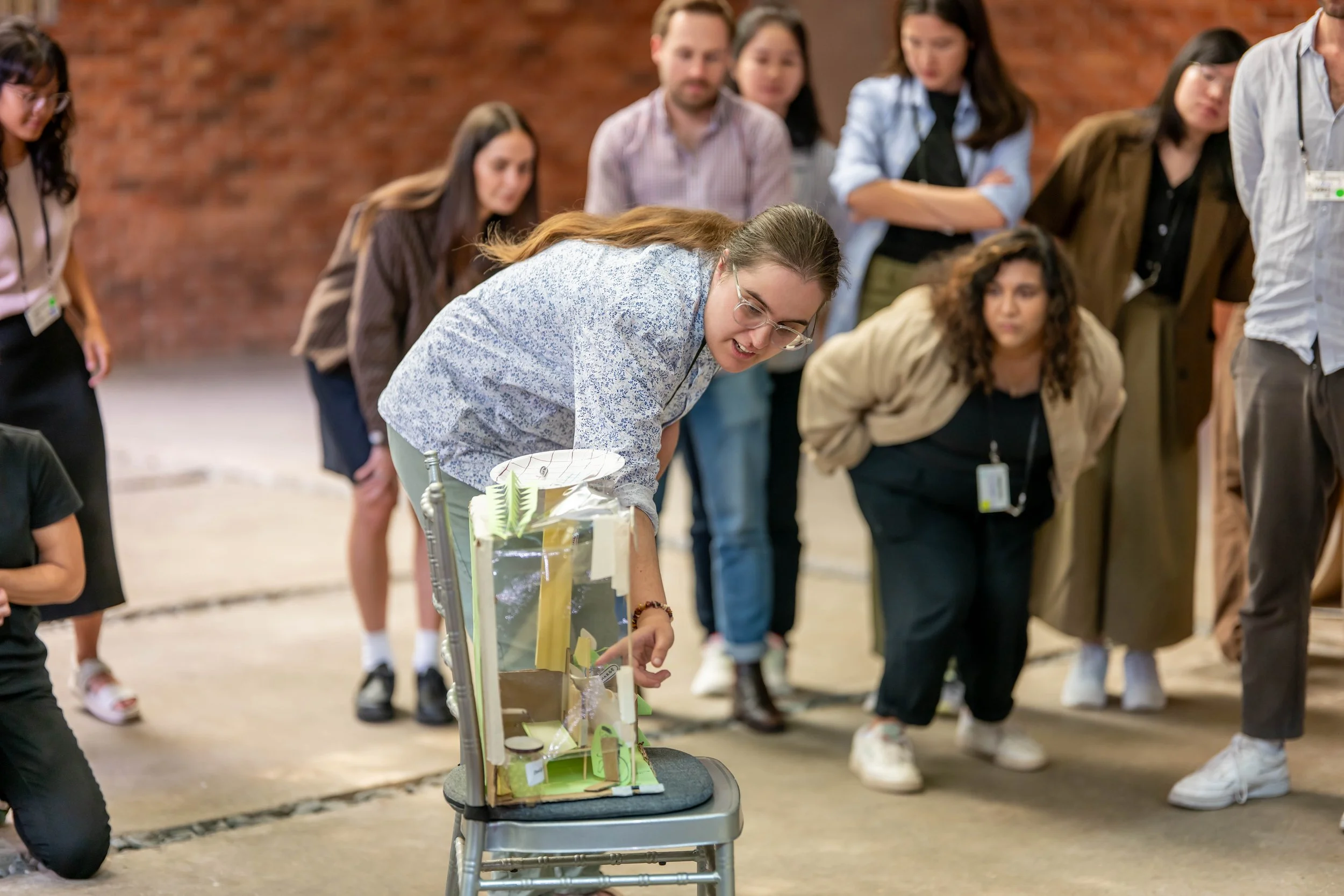
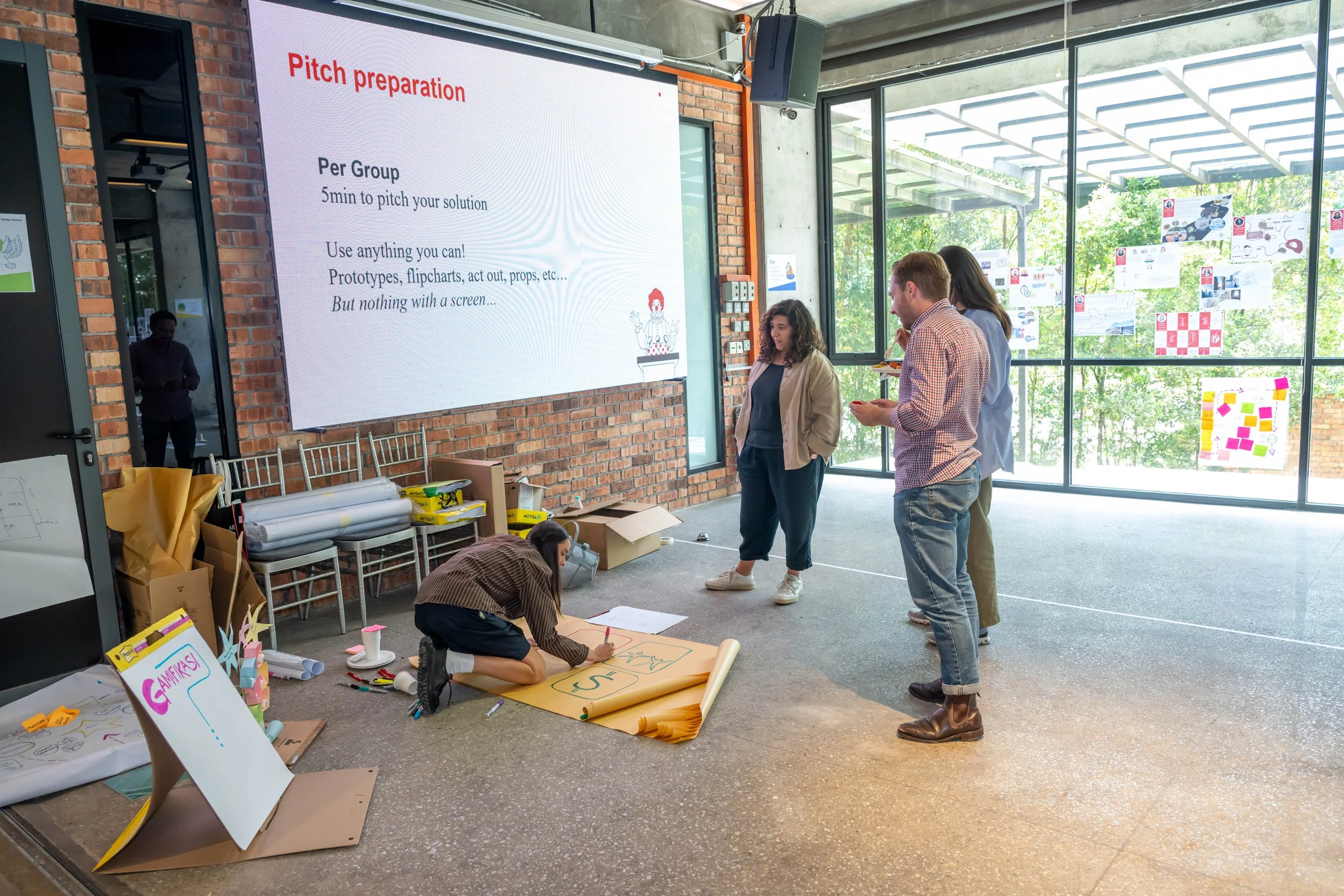
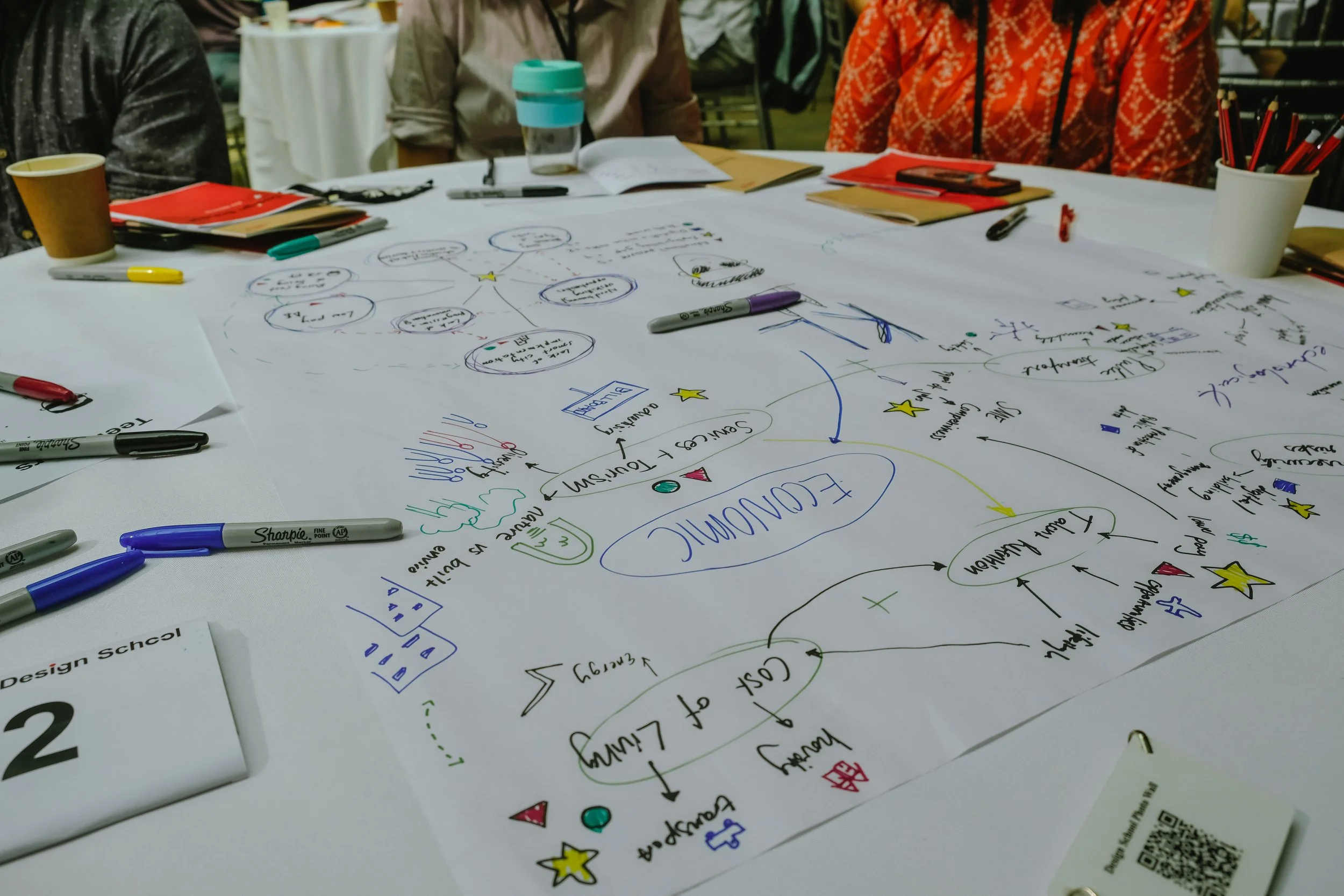
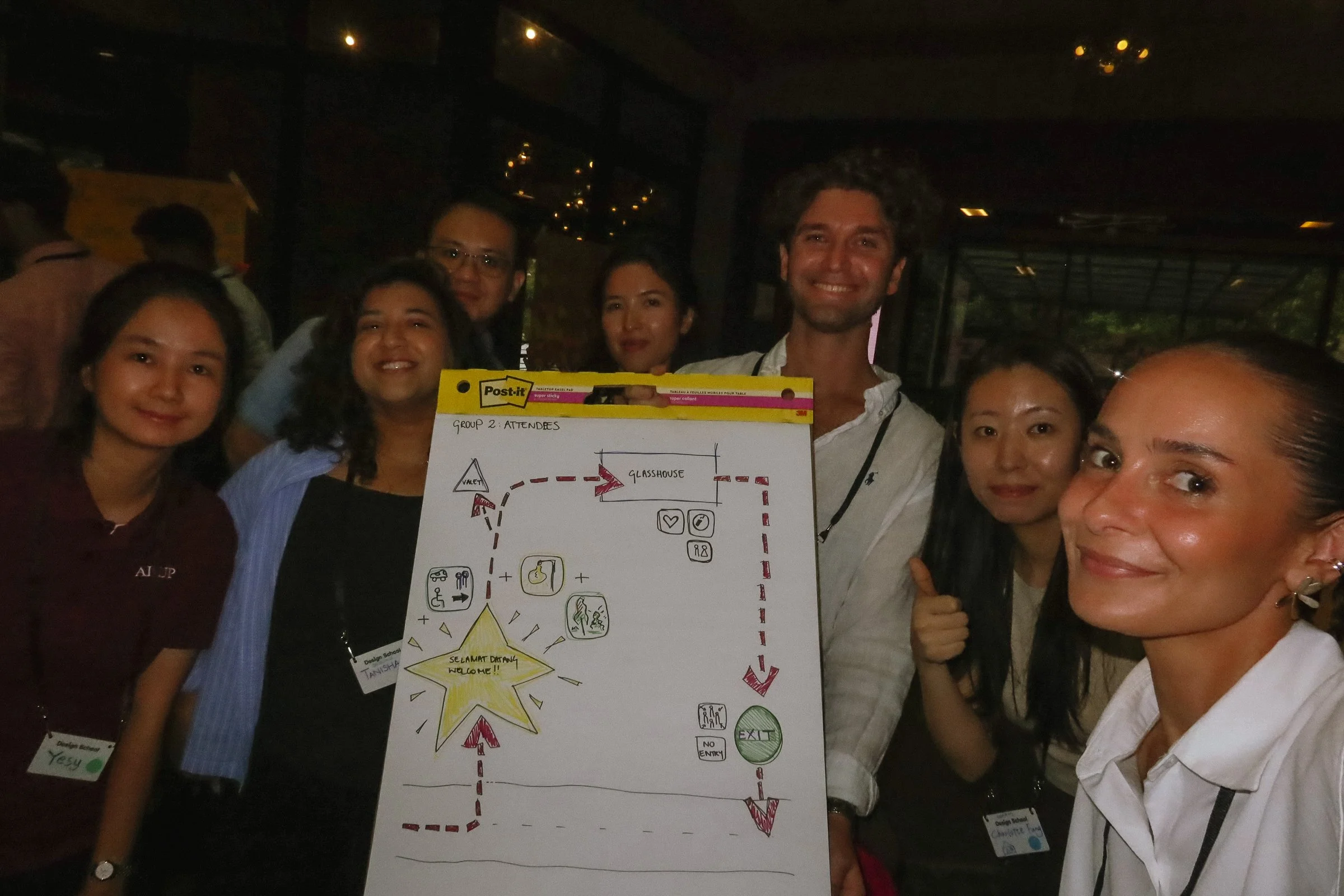
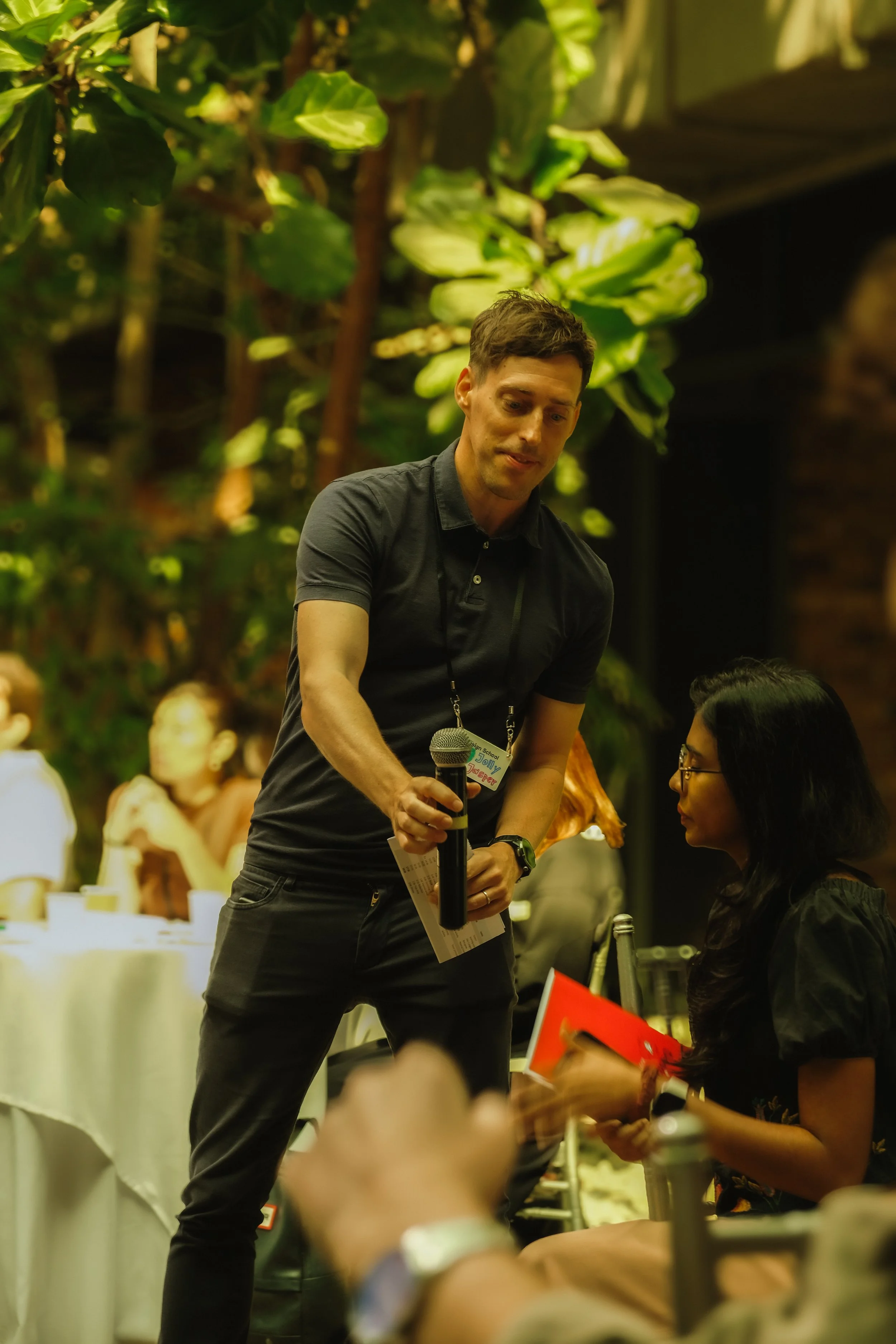
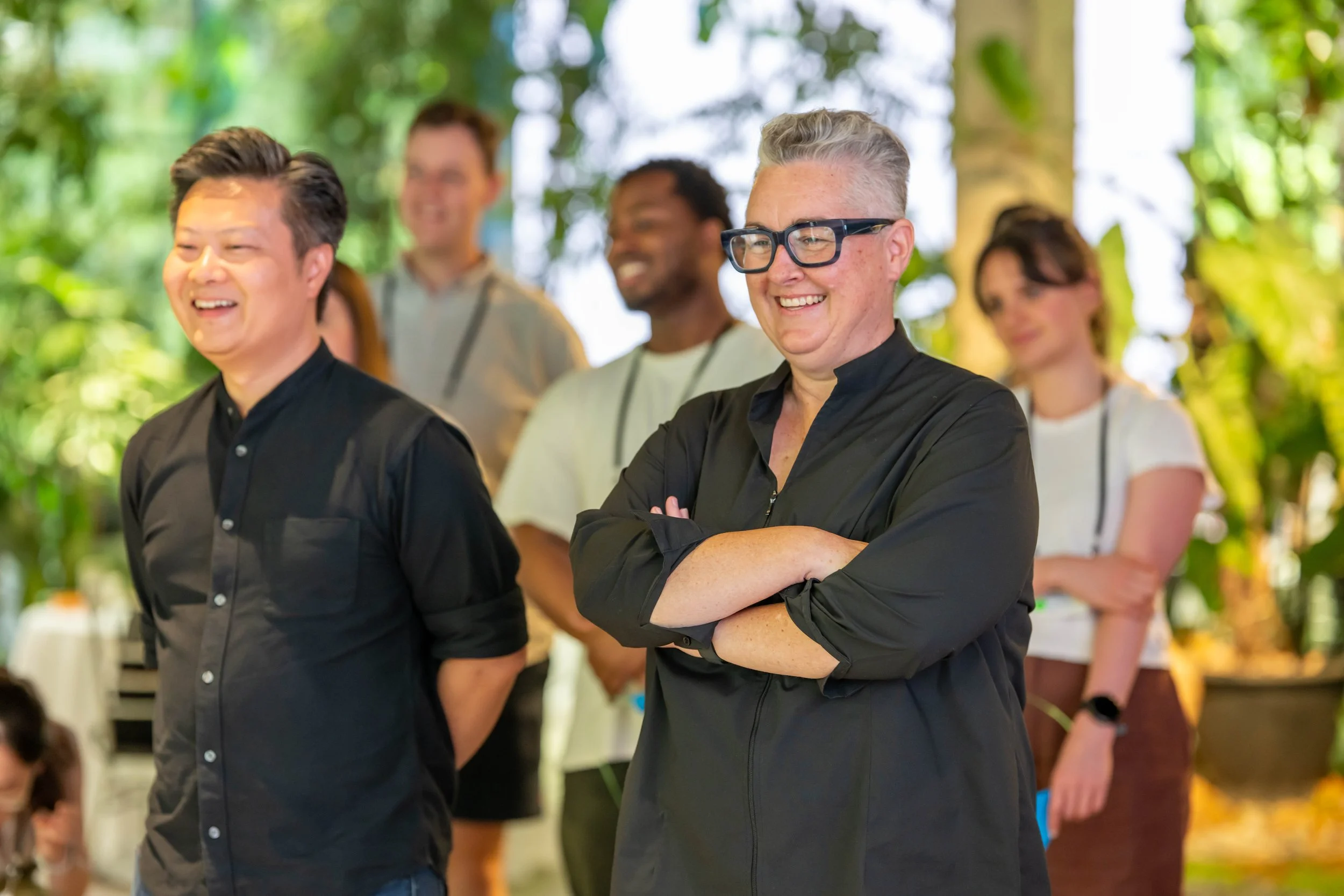
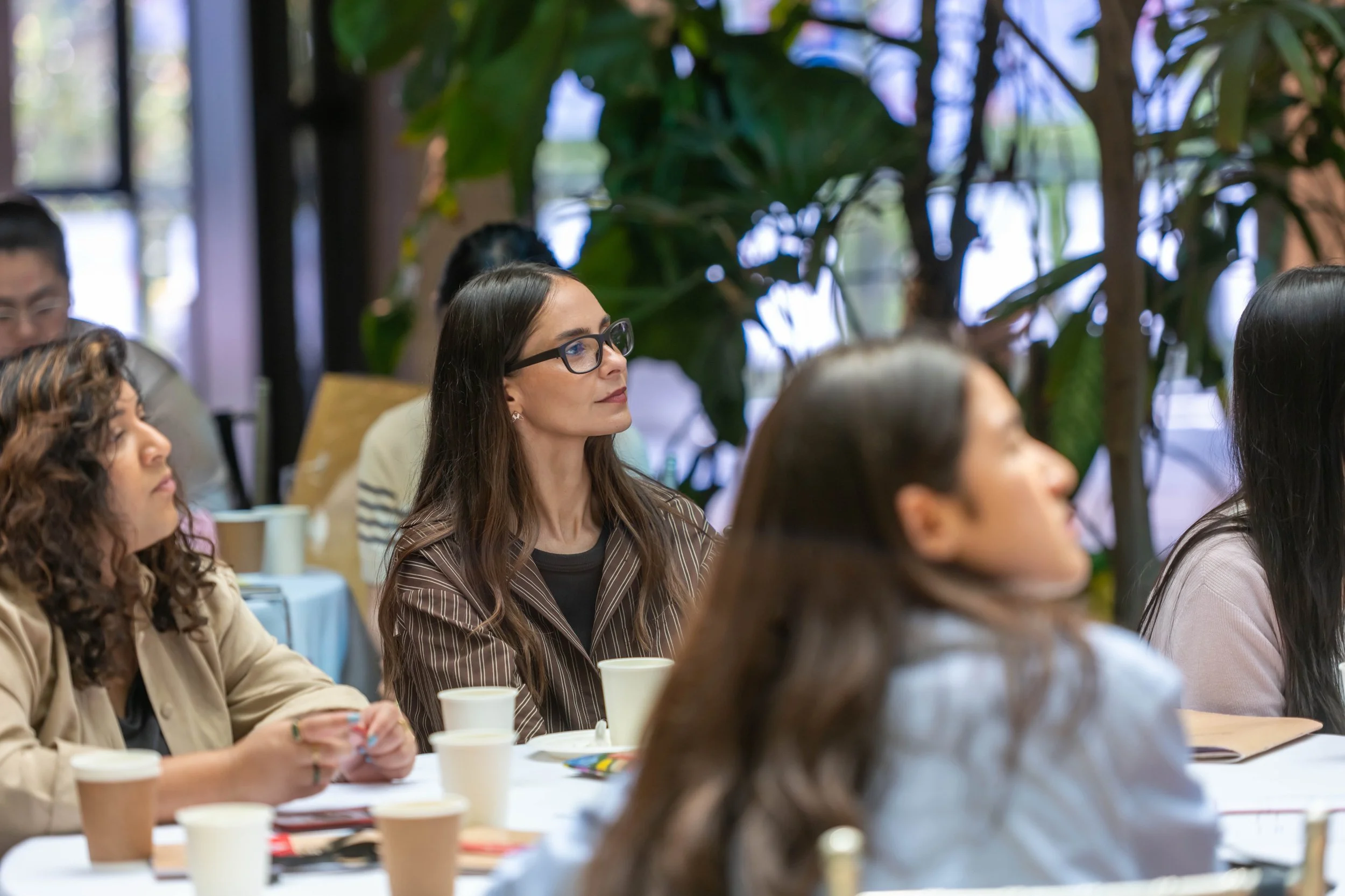
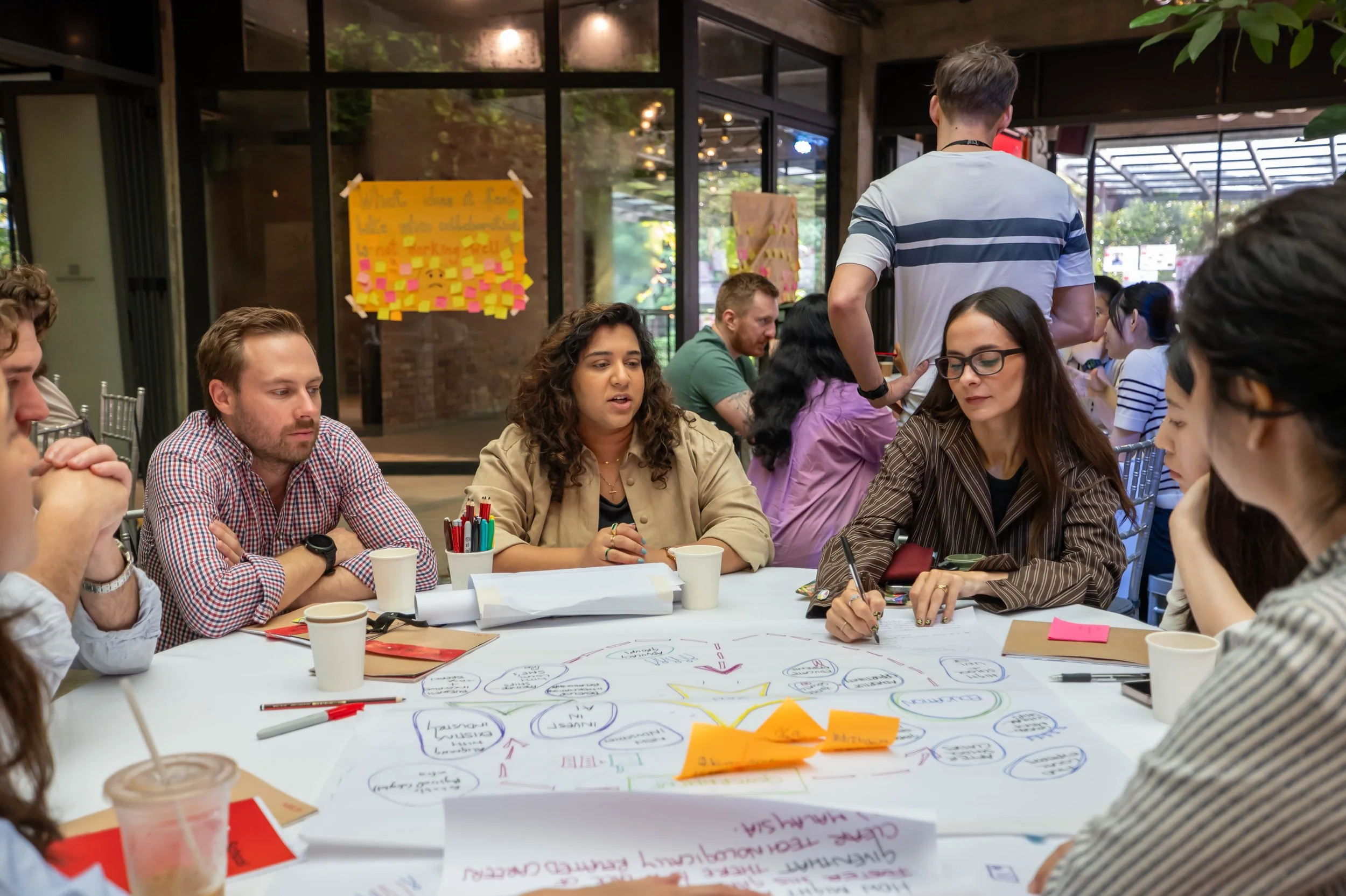
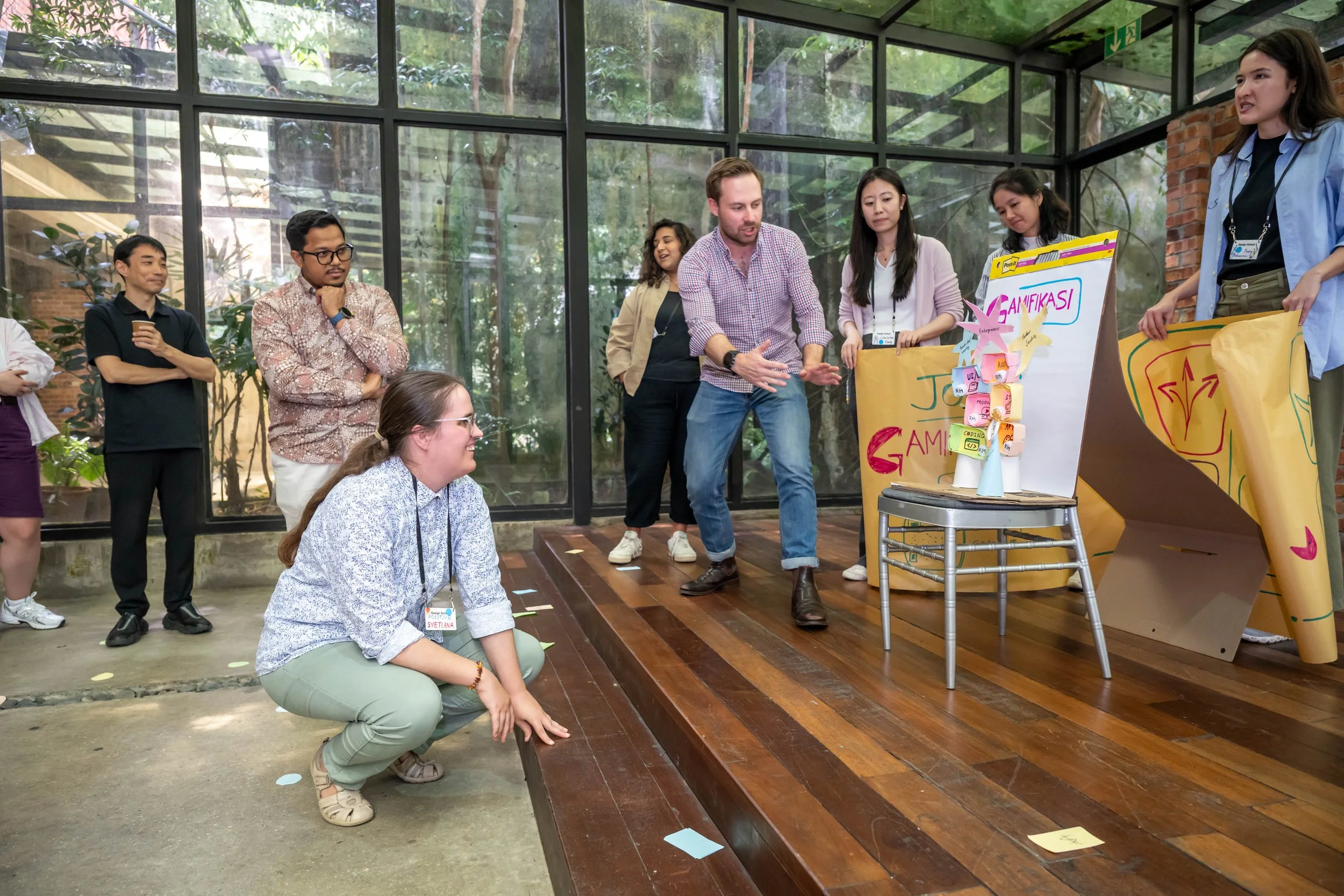
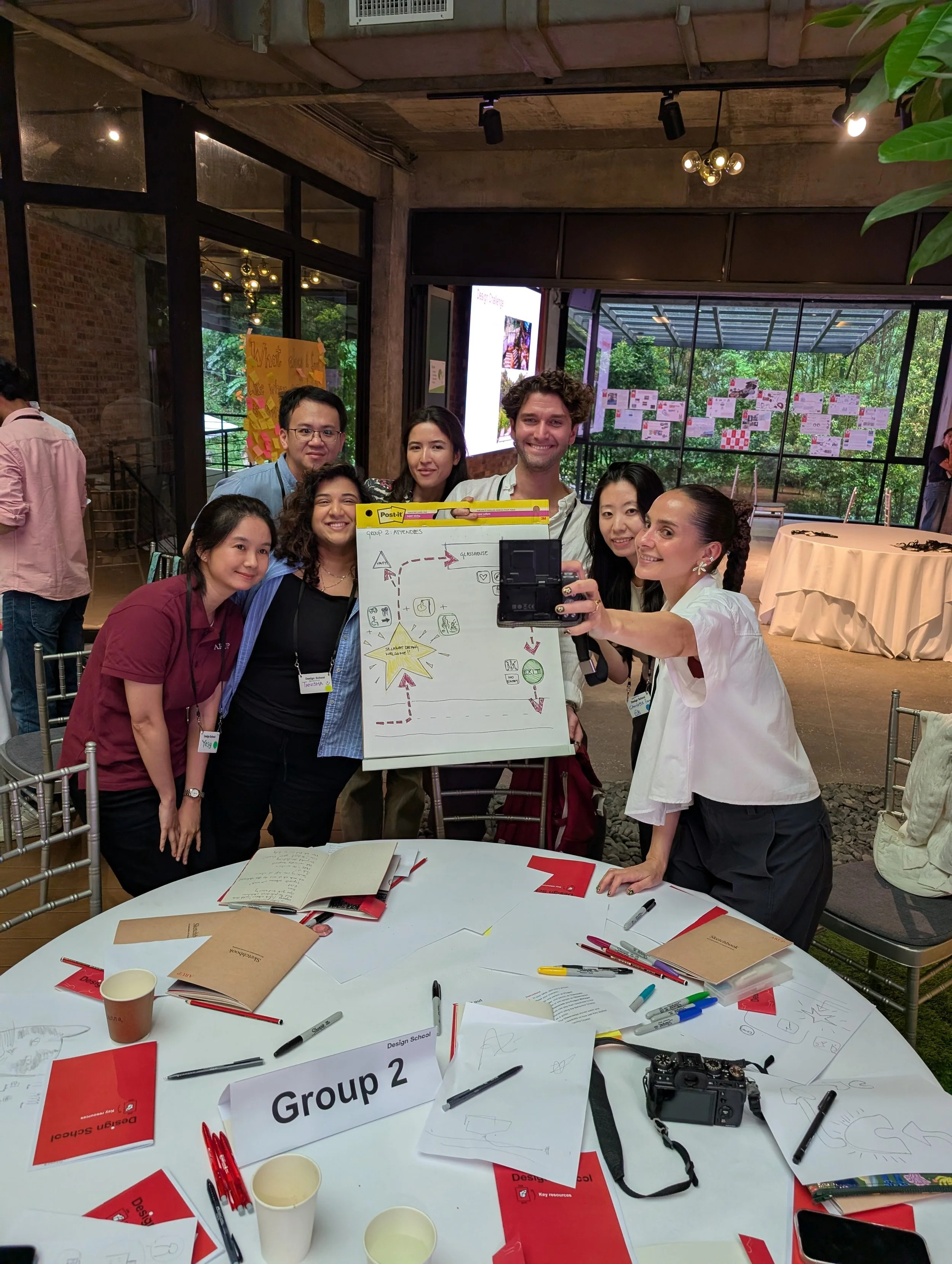
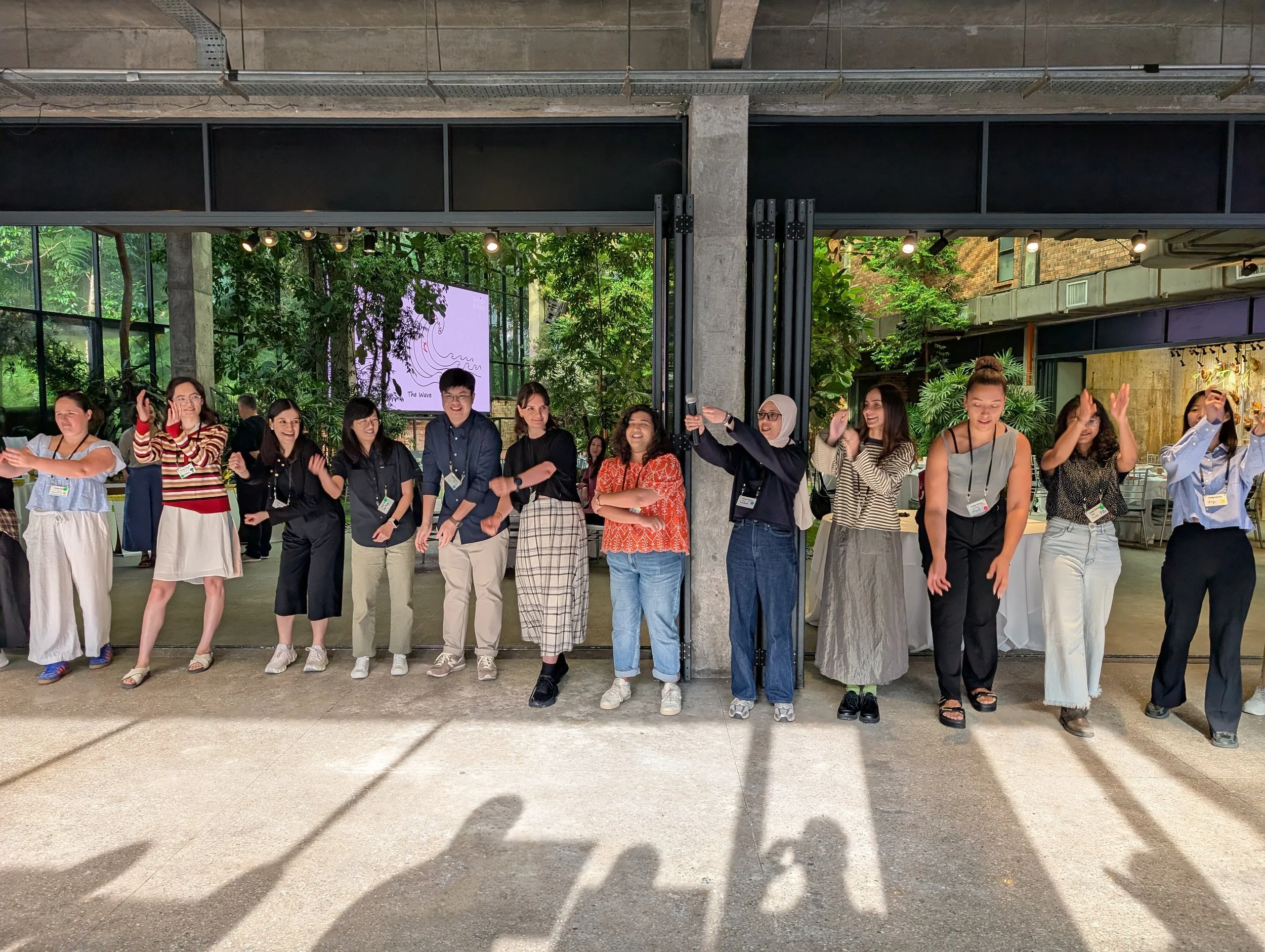
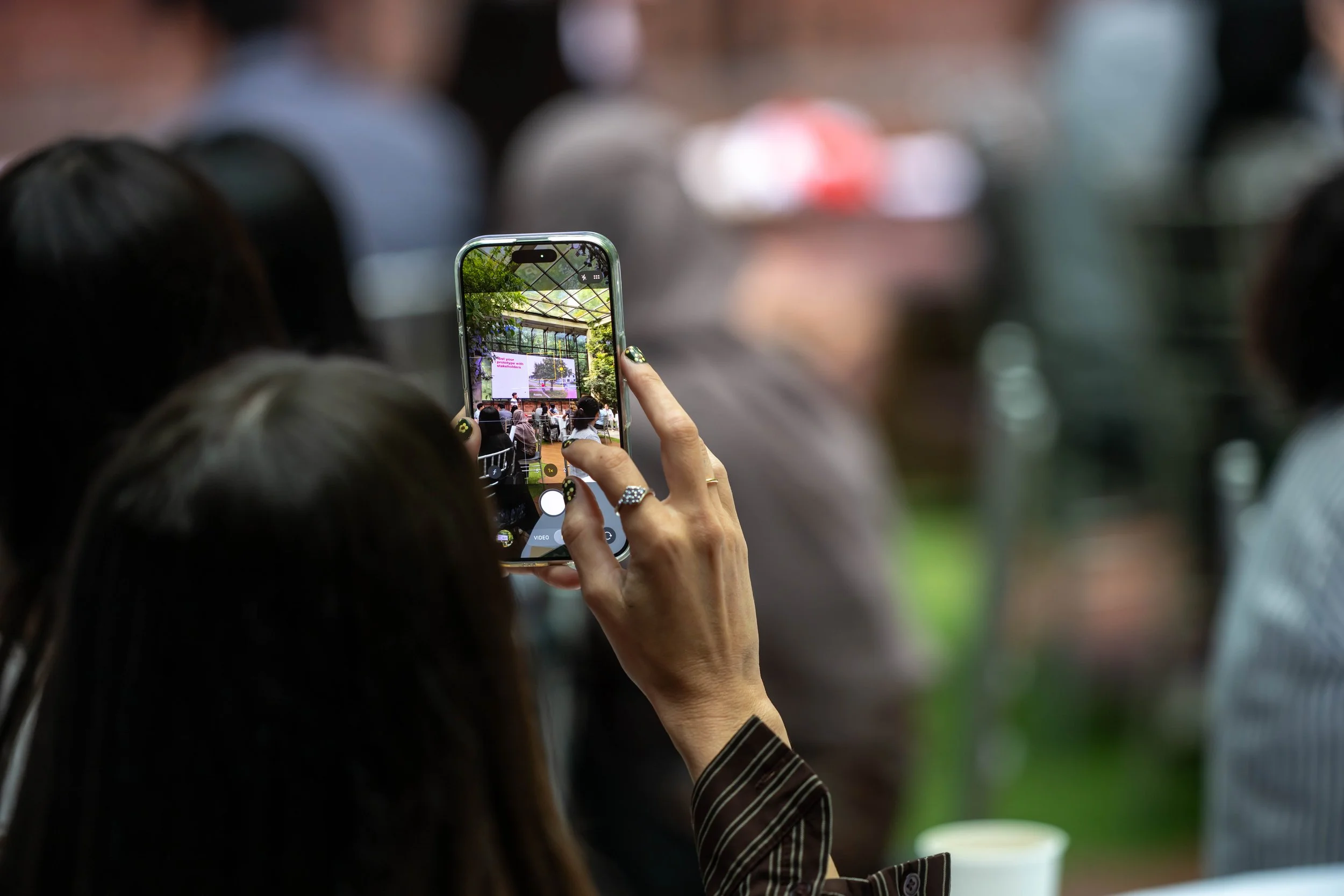
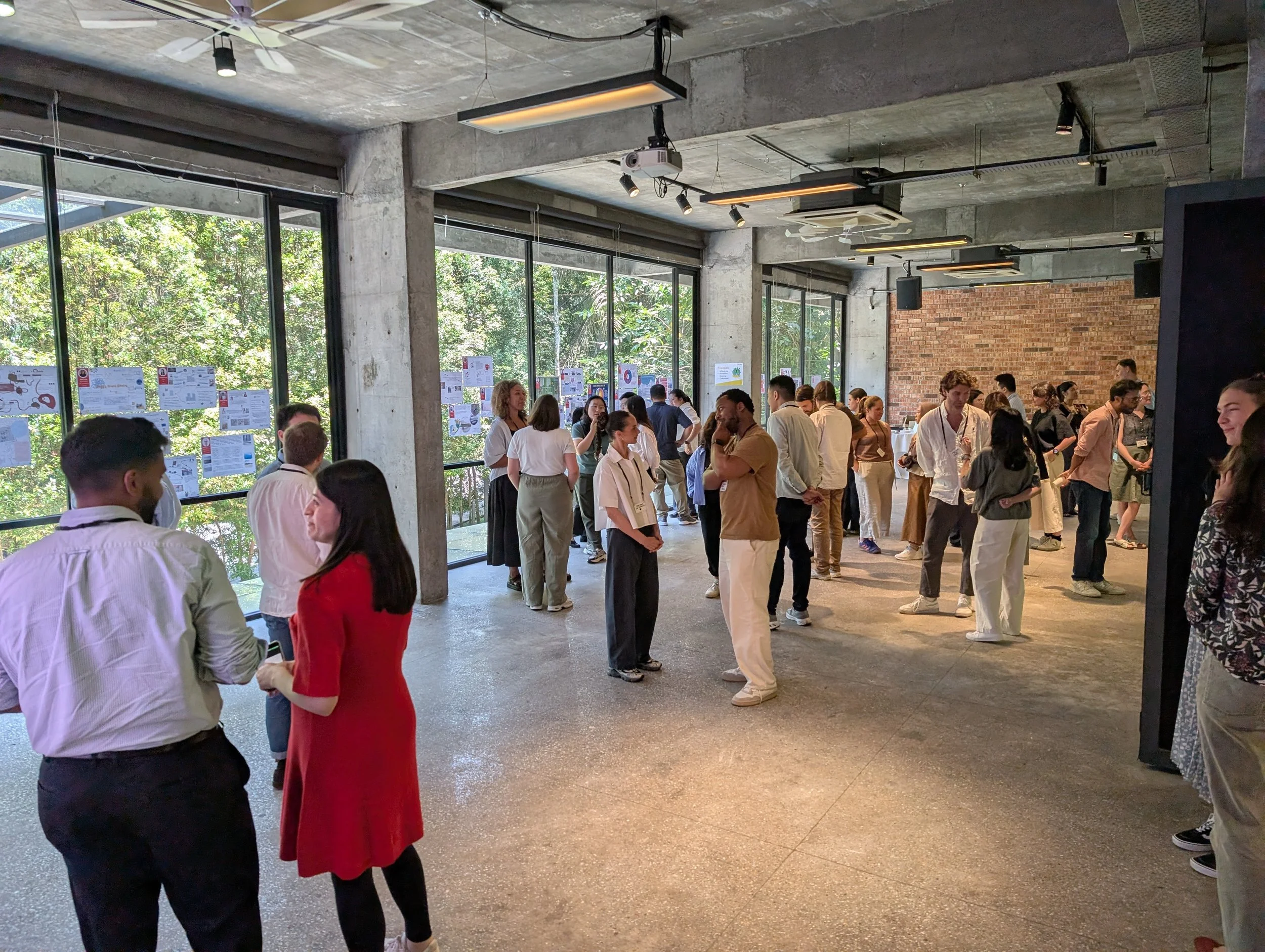
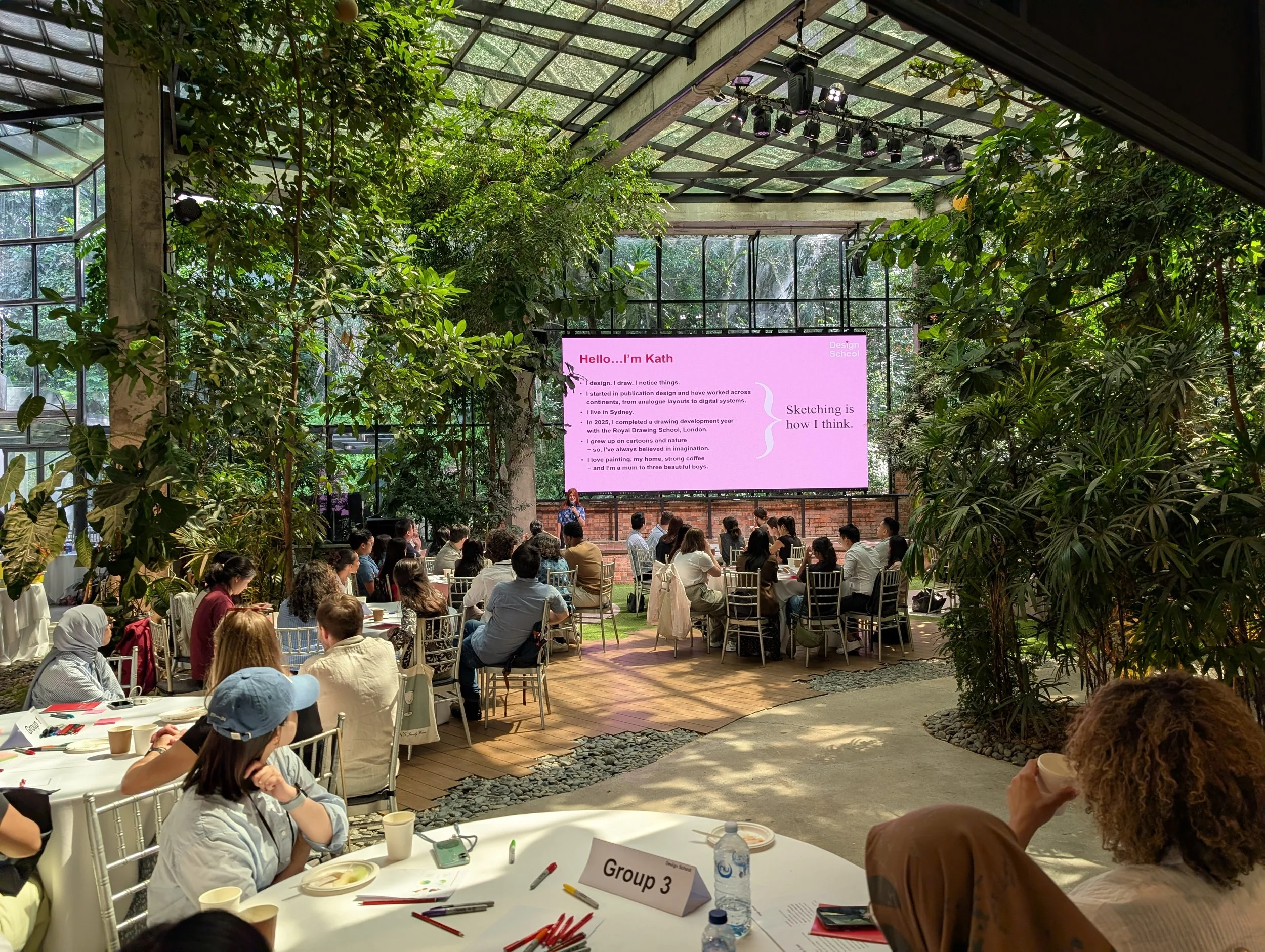
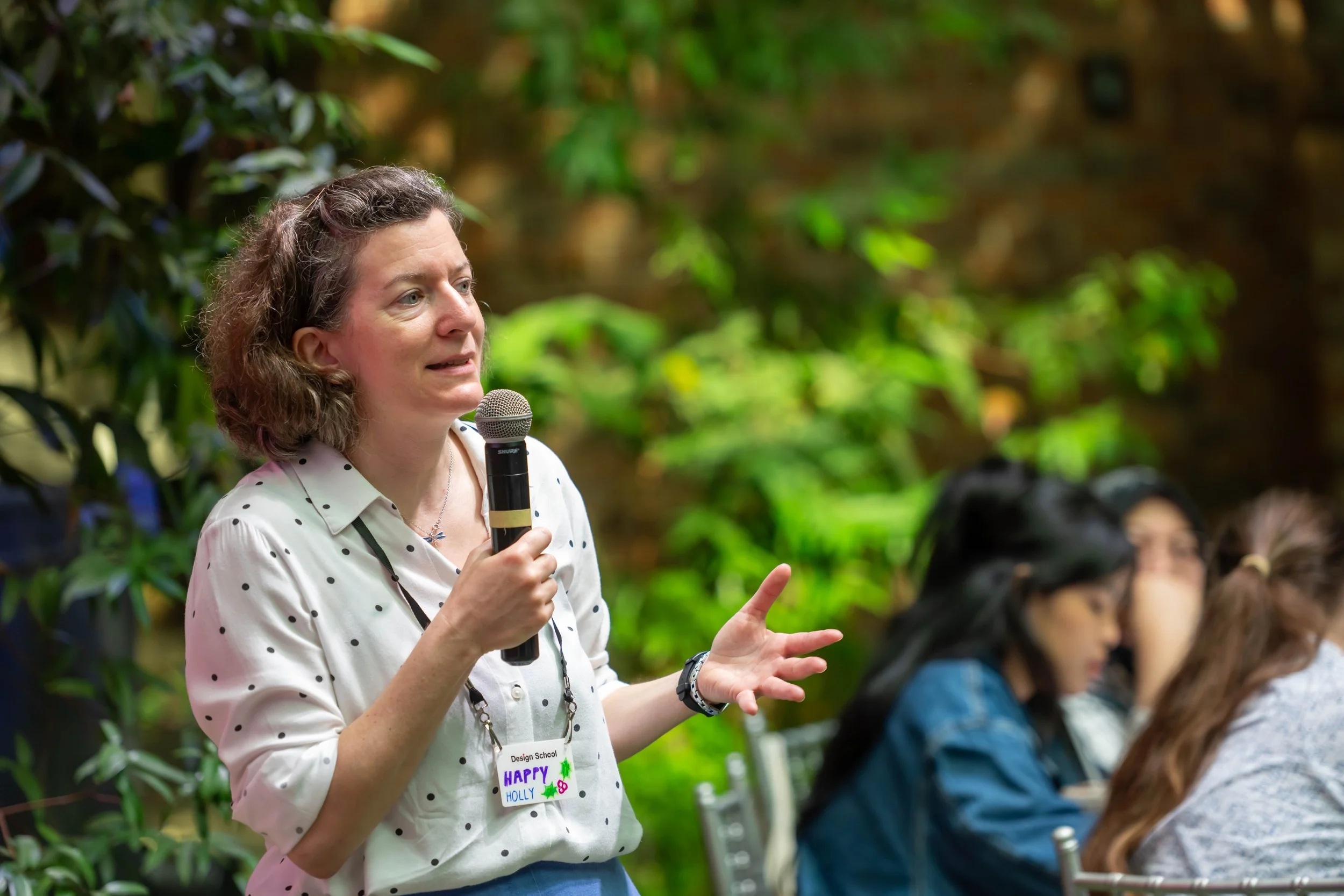
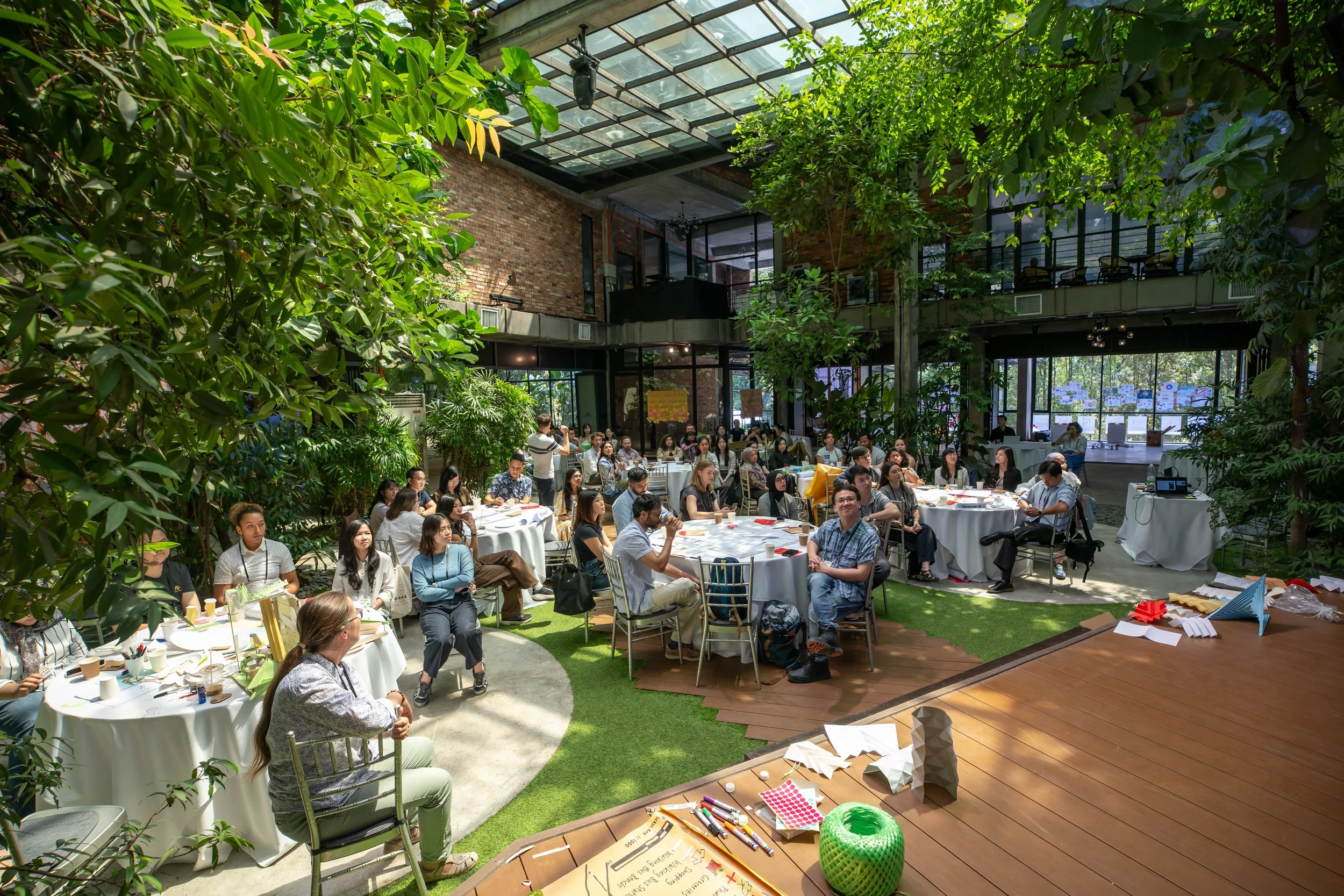
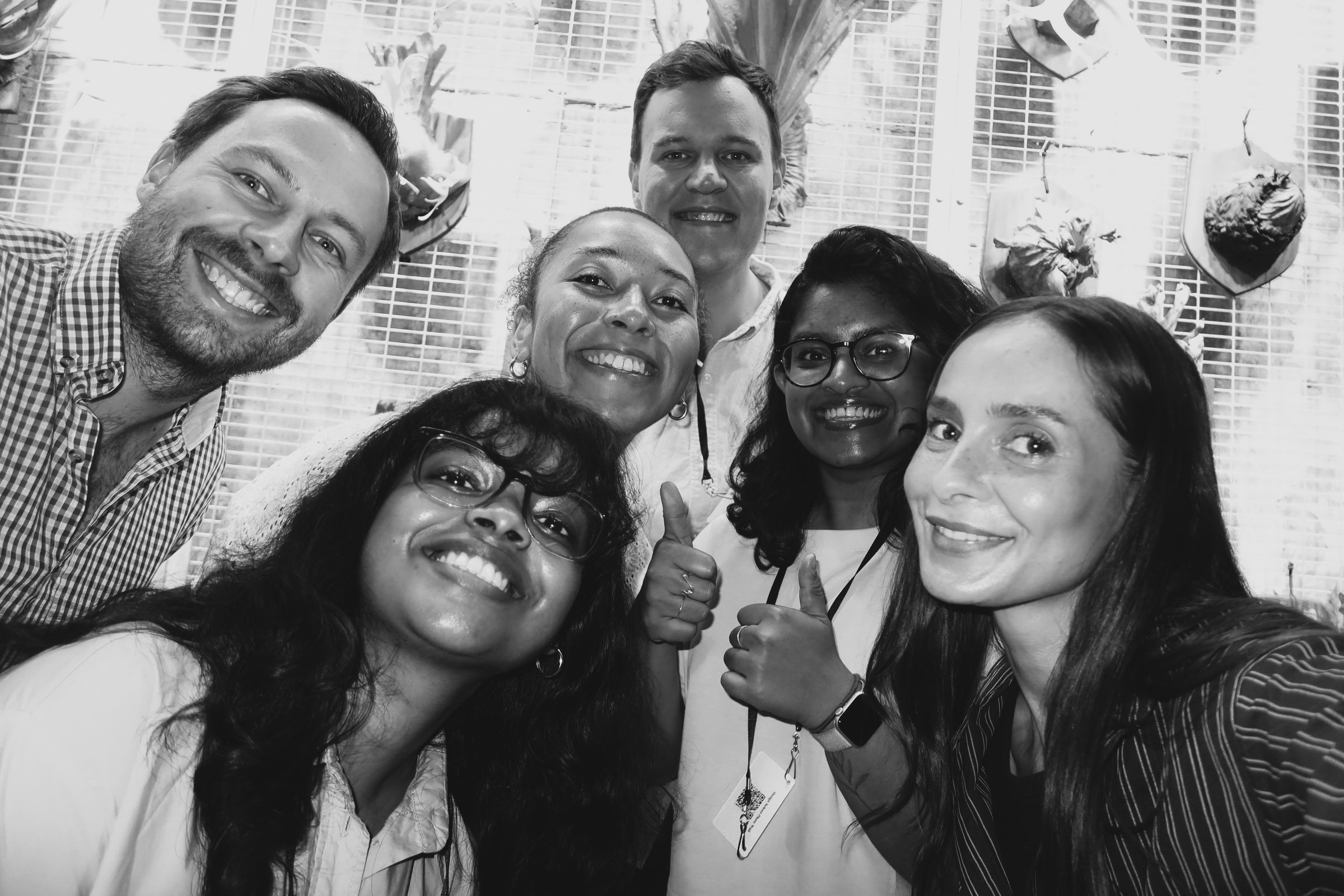
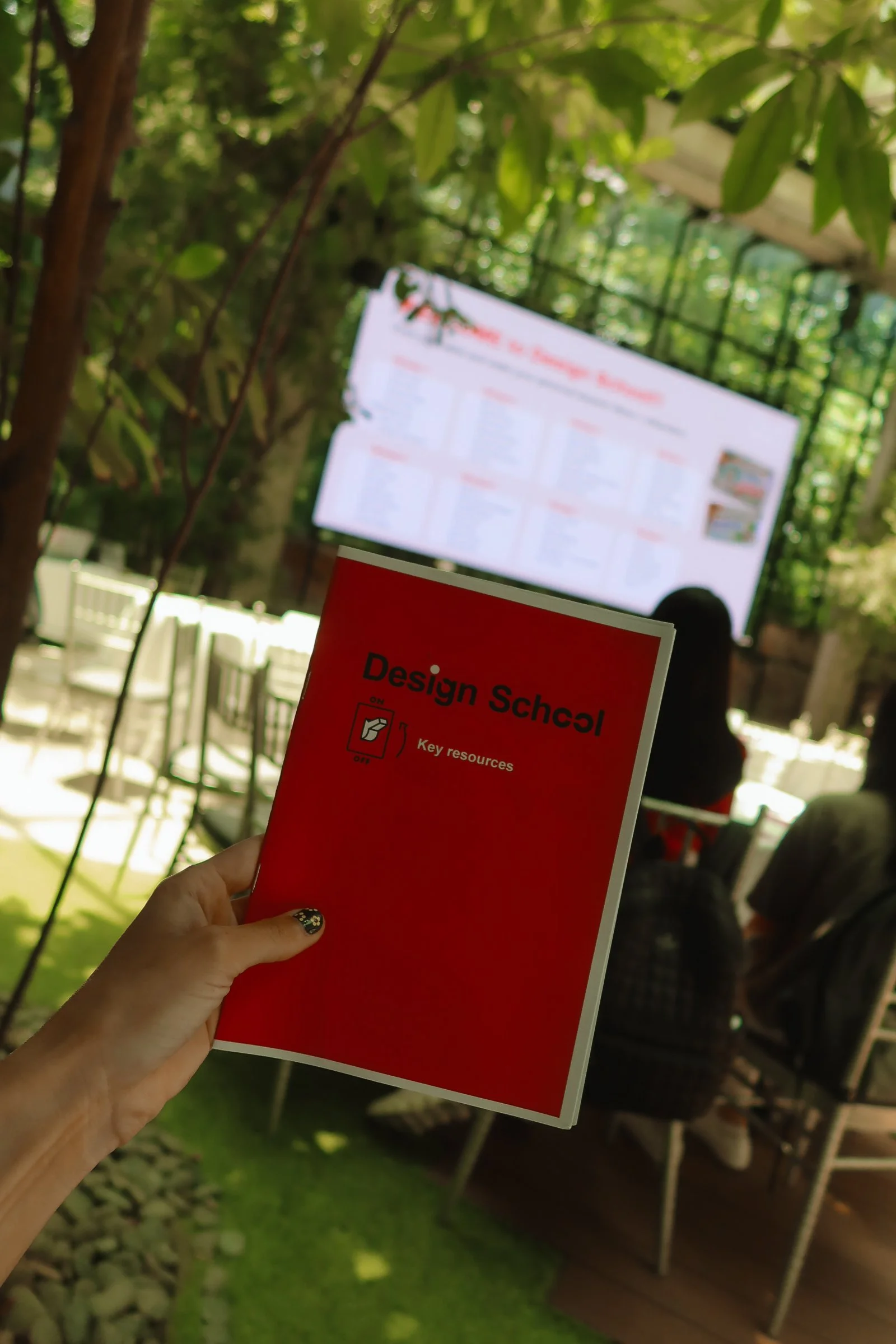
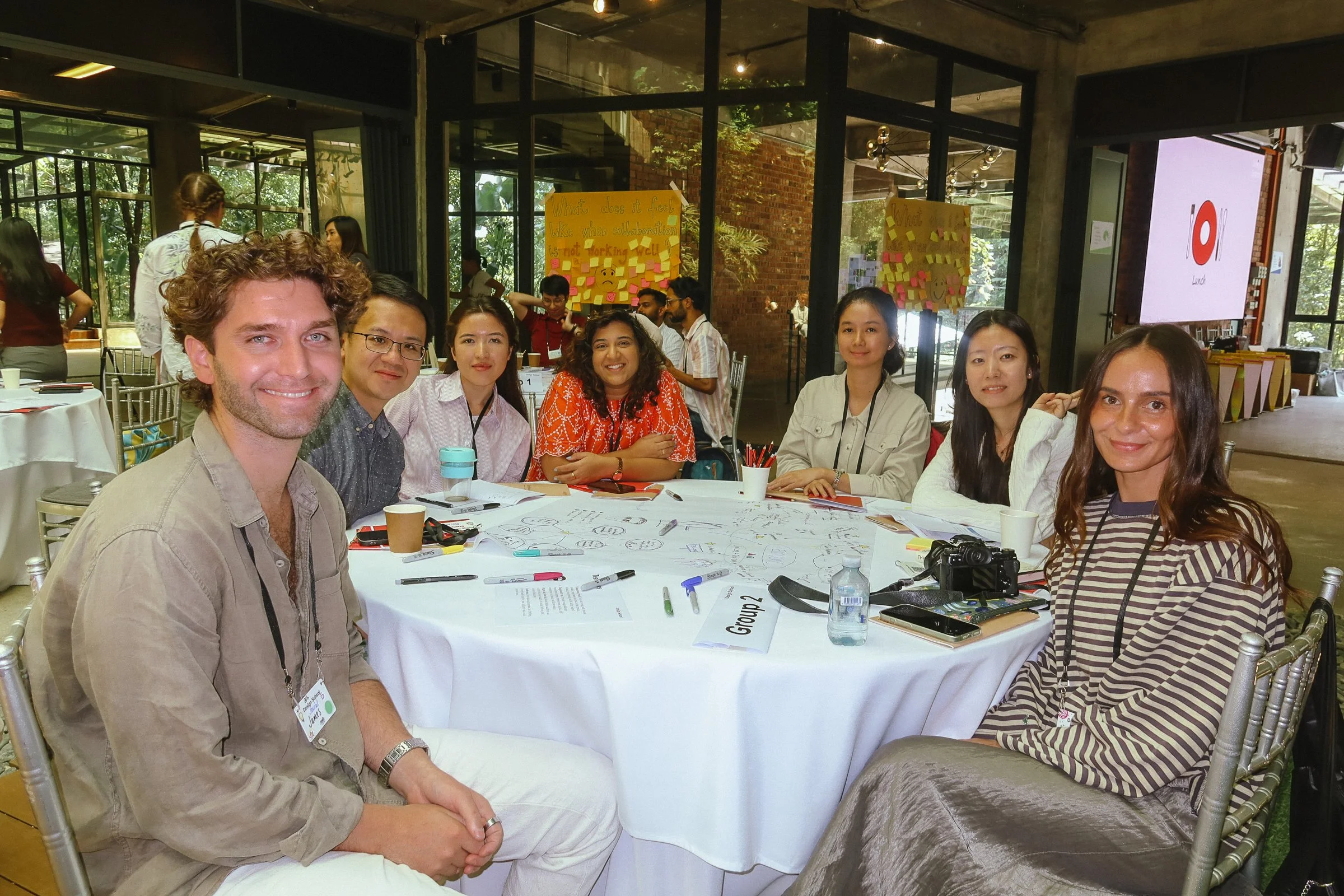
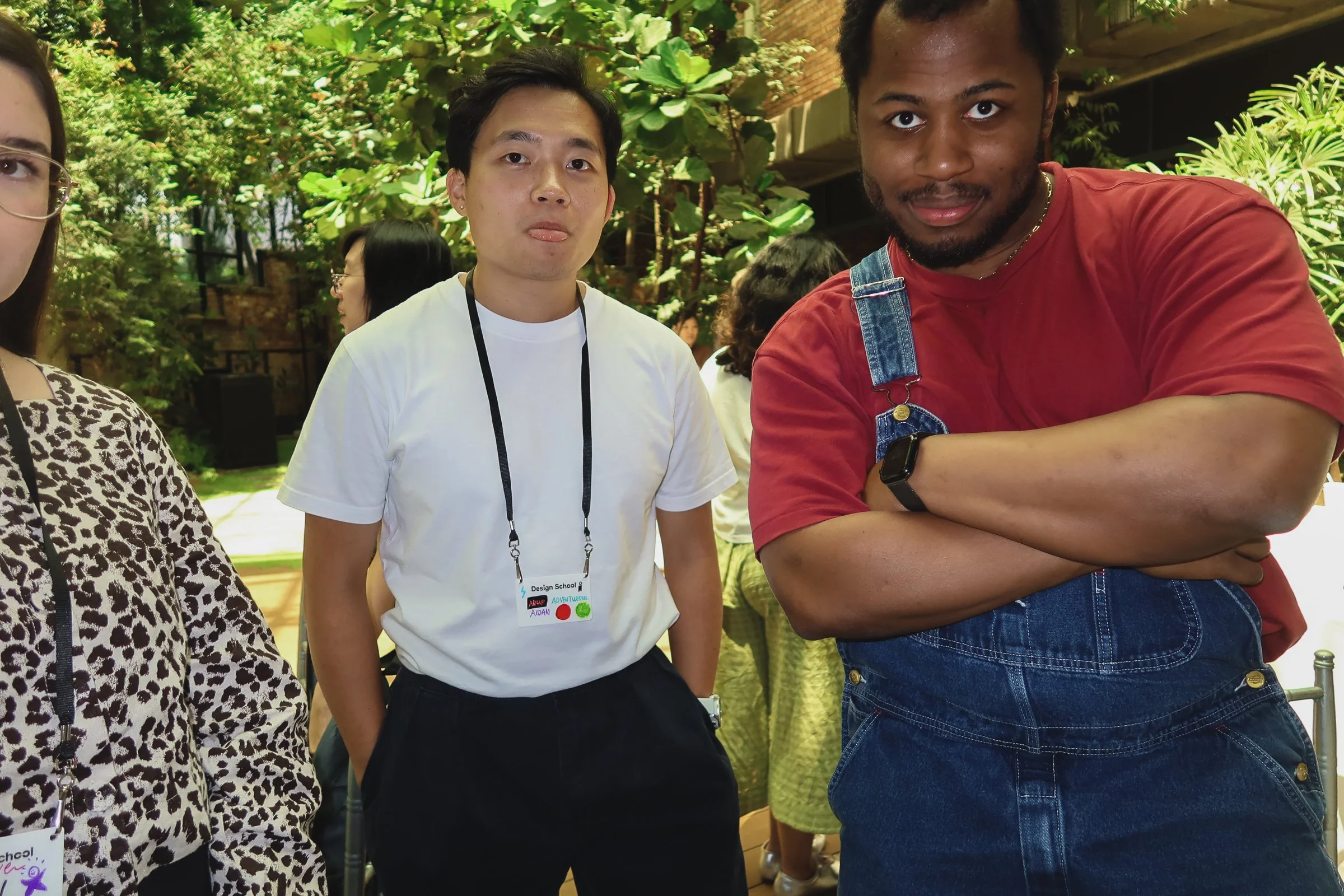
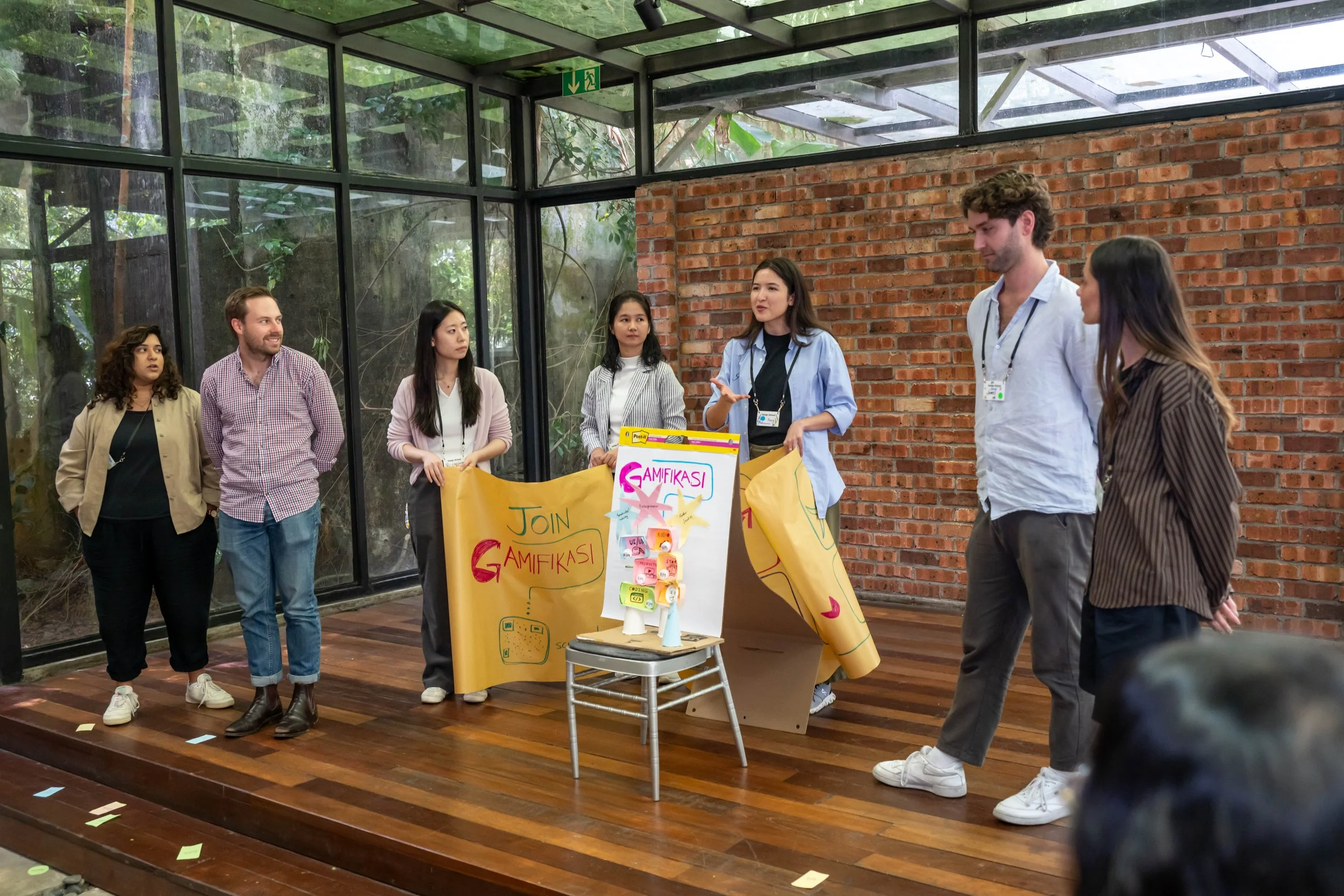
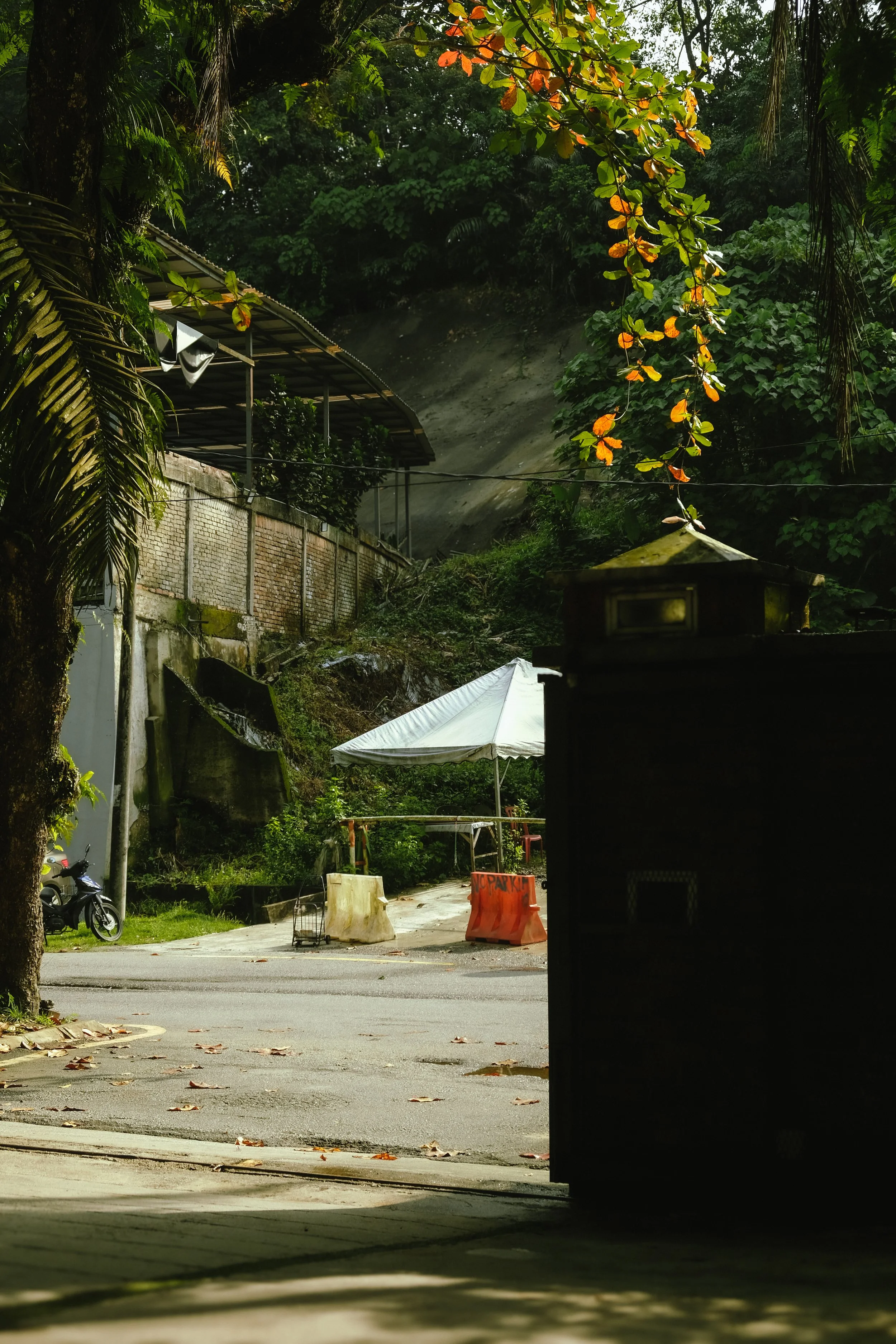
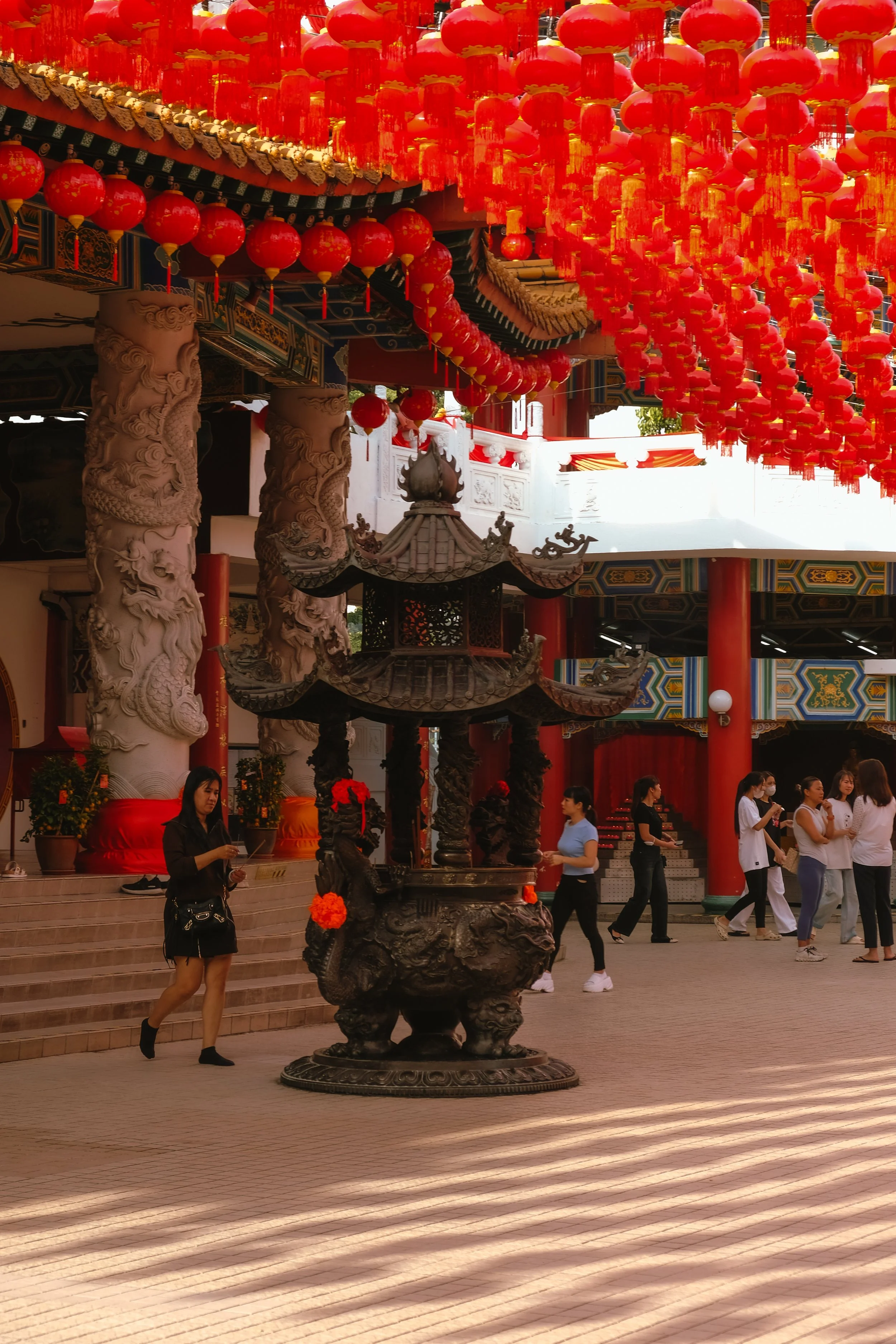
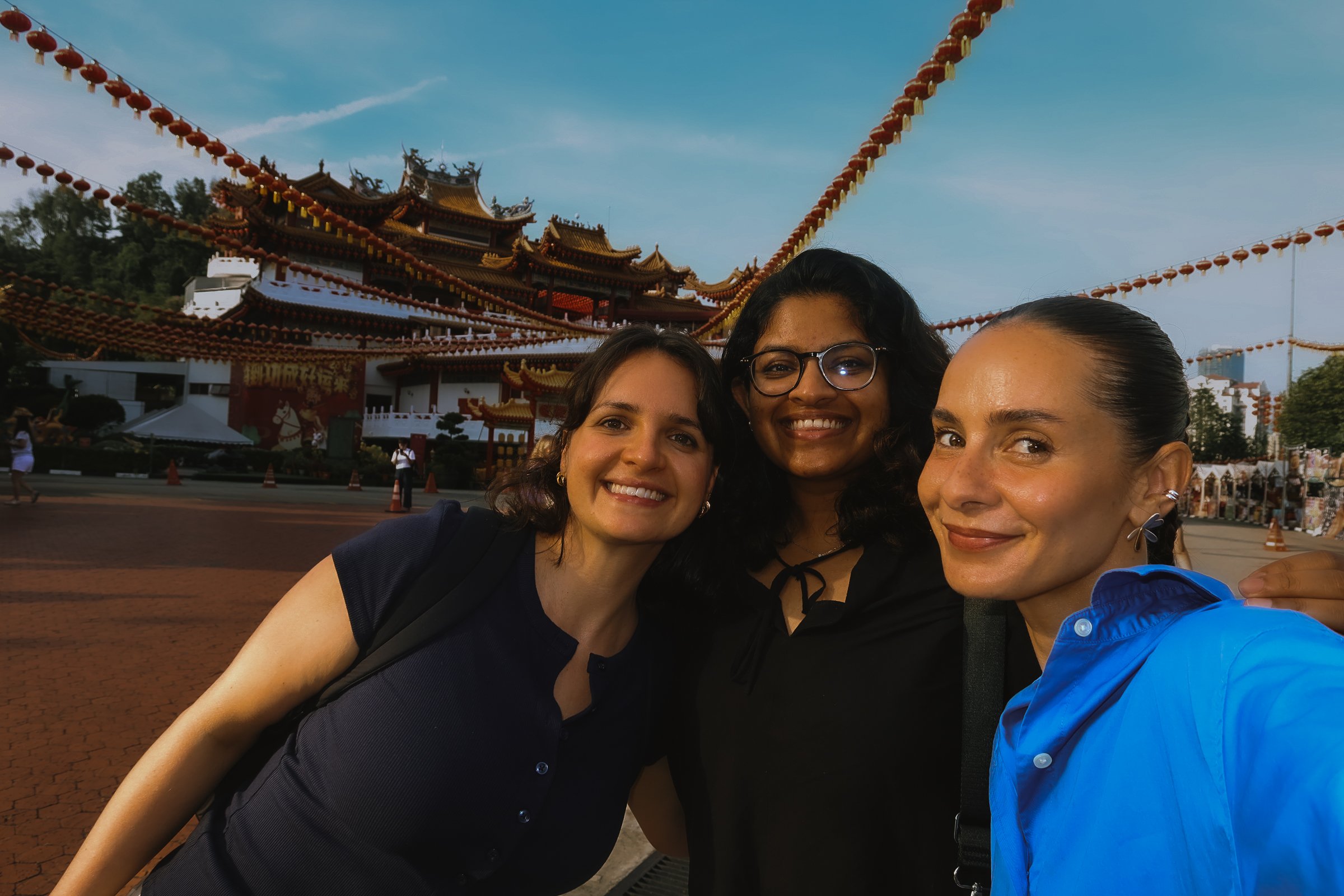
Images are credited to Laz McCormick, fellow design school participants and staff, Andy Leong Photography
Special thanks to the incredible team that hosted this wonderful event, a time was had.

Built to Belong: Altercentric Design
In design there’s a tendency to mythologise the individual: the architect, the visionary, the mind behind the landmark. We see it in names etched on the walls of skyscrapers, in glossy magazine spreads celebrating ‘bold new visions’, and in spaces that are crafted more to make statement than serve purpose. But the world of design is no stranger to contrast, and an alternate approach has begun to quietly emerge; one that posits a step away from self-aggrandising, and a step toward a subtler, yet arguably more important purpose. What if a designer’s real purpose isn’t to showcase, but to serve?

Design Beyond thy Self: Rethinking Legacy Through compassion
In design there’s a tendency to mythologise the individual: the architect, the visionary, the mind behind the landmark. We see it in names etched on the walls of skyscrapers, in glossy magazine spreads celebrating ‘bold new visions’, and in spaces that are crafted more to make statement than serve purpose. But the world of design is no stranger to contrast, and an alternate approach has begun to quietly emerge; one that posits a step away from self-aggrandising, and a step toward a subtler, yet arguably more important purpose. What if a designer’s real purpose isn’t to showcase, but to serve?
The demands on our built environment are shifting, shaped by the relentless pressures of climate change, social division, and the quiet weight of existential uncertainty. Yet the spaces we create often fall short, drawn instead to the allure of economic gain and the hollow promise of accolades. Design, however, holds the extraordinary power to transcend these limitations and become more than a commodity or statement. It can serve as a profound force for purposeful change. To achieve this, design must reimagine its role, abandoning the shallow pursuit of profits and recognition to embrace an ethos of care, connection and service.
In a world that’s become increasingly and acutely aware of its fragile interconnectedness, the concept of ‘Altercentric Design’ presents itself as a hopeful alternative - a philosophy that seeks to dissolve the ego in service of something larger, more enduring, more humane. This is design that doesn’t ask for attention but instead seeks to understand and amplify the lives, ecosystems, and cultures it touches. It’s an invitation for designers to step back, to let the land and its people shape the story and to trade monuments of self for spaces of quiet, lasting impact.
As with any movement that challenges an enduring status quo, altercentric design will bring with it a healthy air of scepticism. In the omnipresent ‘push and pull’ between ego and impact, could the case for altercentric design spell a bold reimagining of our built environment?
Altercentric Design: A Revolution
Not yet formally defined, Altercentric design might be best described as a movement where the core principle is to shift the focus away from the designer and instead toward the broader ecosystem that the space will serve. Emerging from the intersection of sustainable architecture, biophilic principles, and community-driven design, it reflects a growing desire within the field to create spaces that prioritise integration over imposition.
The term 'altercentric', originates from the Latin alter, meaning ‘other’, encapsulating a philosophy that challenges the conventions of traditional architecture. Rather than celebrating individual brilliance, it advocates for designs that nurture connection, resilience and collective wellbeing. This approach dissolves the ego in design, embedding empathy and adaptability into the very fabric of our environments.
With the collective shift toward more ethical and ecologically sound design practices, altercentric design invites us to rethink the purpose of design itself - not as an assertion of control but as a response, a conversation, a form of care for the land and the community. It’s a shift in priority from self-expression to collective empowerment, reimagining our built spaces not as static fixtures but as entities that breathe, grow, and adapt alongside the lives they hold.
In this reimagining, design becomes an art of quiet attention. A craft that listens deeply, shaping spaces to reflect the soul of a place and its inhabitants.
A Quiet Craft
Rethinking design to prioritise the ‘we’ presents an intriguing possibility, which is that the spaces we inhabit could become a reflection of the collective lives, histories, and natural landscapes they’re built upon. Imagine a design approach that unfolds not from a single vision, but from a chorus of perspectives. A space shaped by the lives it will hold and the stories it will gather. Here the designer steps back, not to relinquish creativity but to expand it, embracing a broader vision that captures the pulse of a place rather than the ambition of an individual.
At the heart of altercentricity sits the unique role of the designer, distinctly different from that of an artist or an engineer. While an artist’s work may reflect a personal vision, offering a window into their individual perspective, an altercentric designer works in service of a collective vision. Their responsibility is not to impose a singular statement but to translate the diverse needs, histories, and identities of a community into a cohesive space. In this way, the designer becomes a custodian of collective dreams, a facilitator who shapes the physical world not to leave a personal mark, but to honour a shared purpose.
Designing with a collective vision means embedding oneself in the community, gathering deep insights by understanding the rhythms of the land - its light, its winds, its ecosystem, all while listening to the stories and needs of those who will live within or have some connection to the space. Designers would host workshops and site visits, inviting community members to share ideas that go beyond aesthetics, every design choice guided by a sense of stewardship. Will this space age with grace? Will it serve future generations? Is it adaptable for changing needs? The result is a place that doesn’t merely exist but feels like it’s grown from the land and stories around it. A space where human experience, natural landscape, and cultural memory coalesce into something alive and enduring.
This is design that doesn’t demand recognition but instead creates meaning. Spaces shaped by a shared vision aren’t static; they evolve, breathe, and grow alongside the people and ecosystems they serve. The legacy here isn’t found in awards or accolades but in the quiet resilience of a place that develops a timeless patina, where each crack in the stone or weathered grain in the wood reflects years of use, love, and life. This approach invites us to see the architectural world not as a statement but as a gift, a place where people and nature find belonging, connection, and continuity. And perhaps, in letting go of individual legacy, we gain something more enduring - a space that in its humility, becomes truly ‘of place’.
Enduring, Yet Impermanent
In our society obsessed with permanence and legacy, altercentric design invites a refreshing paradox; spaces that aim to endure not through indestructibility but through adaptability. Rather than representing a reinforced idea fixed in a time capsule, these spaces are designed to live, grow, and sometimes even fade alongside the people and ecosystems they support. This approach acknowledges that change is an inevitable part of any landscape, encouraging designers to craft spaces that are flexible enough to evolve with shifting needs and conditions and when their time has passed, to seamlessly return to the earth.
Endurance doesn’t imply rigidity; rather, it embraces what we might call ‘living architecture’, spaces that adapt and soften with time, embodying the quiet resilience of the materials themselves. Timber darkens, stone weathers, surfaces wear, all growing richer with each passing season. These spaces don’t aspire to remain pristine or untouched, instead they invite the subtle marks of time, gathering the texture of lives lived and memories made. It’s design that breathes, enriched by each interaction, capturing a spirit that values presence over permanence.
It’s impermanence becomes a strength, allowing spaces to respond naturally to changing seasons, community needs, or environmental shifts. In this way, a garden, a plaza, or a park might adjust its layout or rewild areas as seasons change or community desires shift, reflecting the evolving story of the place. This design philosophy encourages us to view spaces not as timeless in their fixed form but as enduring in their adaptability - a reminder that the truest measure of longevity isn’t permanence but relevance. Sometimes, a space designed to let go is the one that leaves the deepest impression.
A Call to Collective Resilience
As we grapple with the escalating realities of environmental degradation and social division, our approach to design should evolve from a pursuit of individual legacy to a commitment to collective resilience. Altercentric design offers a transformative vision, inviting us to reimagine our built environments as places of connection, humility, and care. Spaces that transcend the ego of the creator and instead honour the lives and landscapes they inhabit. This philosophy urges us to embrace a paradigm shift, not out of convenience, but out of an ethical imperative to restore balance. Future generations will inherit the consequences of our collective short-sightedness, the centuries of prioritising exploitation over stewardship, and profit over preservation. We have the opportunity to counter this. By adopting altercentric design we’ll build spaces not for personal recognition, but for adaptability that enables enduring relevance. This isn’t just a theoretical new approach to design; it’s the opportunity for humankind to reposition it’s place in nature and find belonging, continuity, and connection in the modern world.


A Visual Journey Through 3 Days of Design, Copenhagen
Here’s some cool shit I saw at the 3 Days of Design in Copenhagen.


Hein Studio

ATYM. Featuring bold, sculptural shapes that redefine Scandinavian design with their expressive forms and high-quality craftsmanship. https://aytmdesign.com/


https://www.mattiazzi.eu/

Innovation in Tradition: Søuld, 3 Days of Design
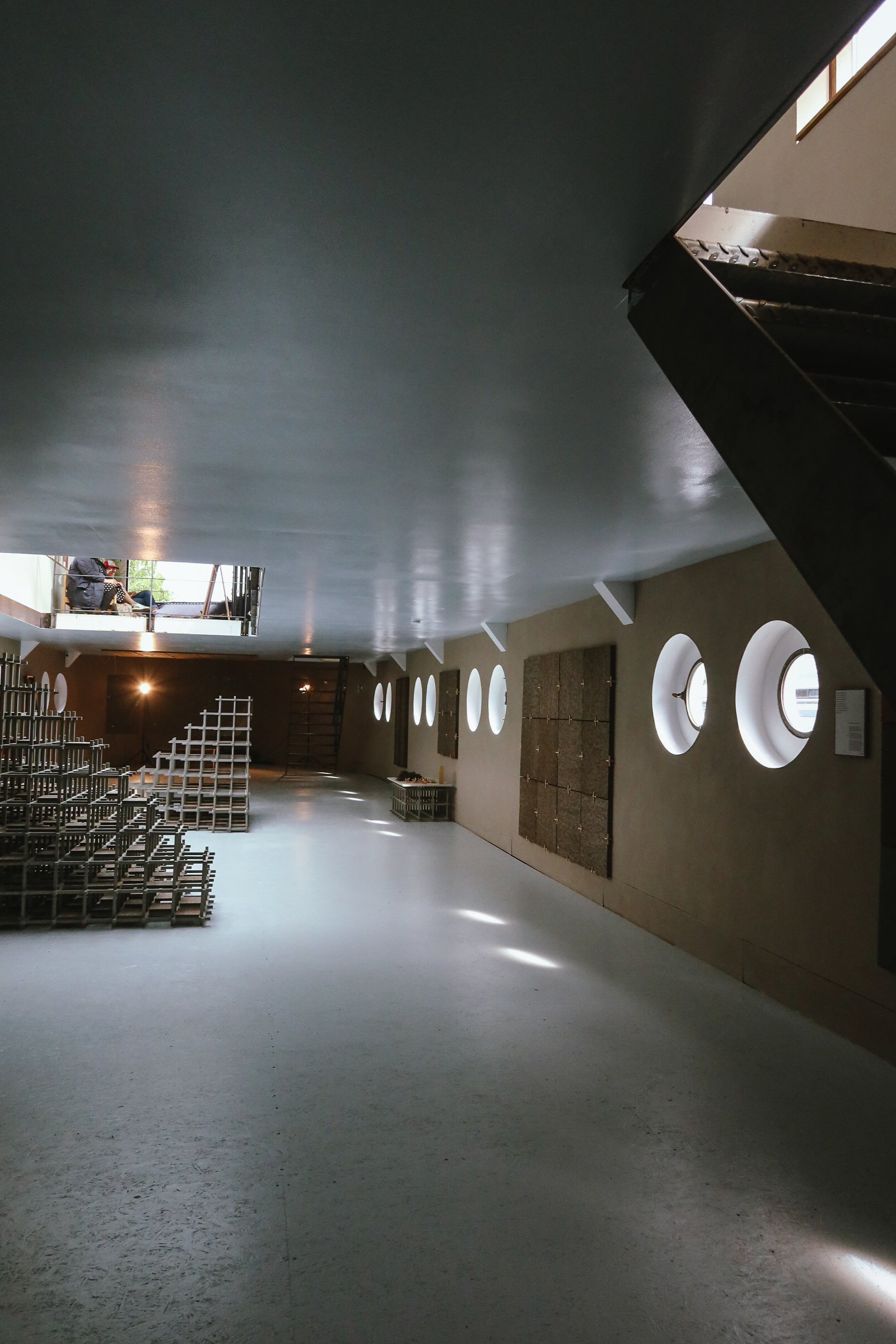
One such exhibit that captivated my imagination was from Danish innovators, Søuld who have developed an incredible new building material made from a marine grass that was traditionally used for roofing applications on the island of Læsø. Through sheer curiosity, I was compelled to attend their story telling and roof weaving workshop in the ‘industrial harbour-turned-cultural hub’ of Refshaleøenan. Their gallery exhibit was on a charming old boat moored in a picturesque canal, with sustainability icon ‘CopenHill’ serving as a dramatic backdrop (I still can’t decide if this was serendipitous, or masterfully deliberate).
As the gently flowing water lapped against the boat, founders Kirsten Lynge and Henning Johansen shared the story of the Eelgrass rooves of Læsø

The 3 Days of Design festival in Copenhagen is a platform for emerging and established design brands from Denmark and around the globe. It manages to be both delightfully eclectic yet highly curated, and having attended this years’ event I can confirm that it’s an absolute must-do for anyone with a passion for design and sustainability (as if you needed any more of a reason to visit this incredible city).
The theme of the festival this year was "Dare to Dream". It created a buzz throughout the city as attendees excitedly worked their way from one event to the next, following a trail of signature pink balloons that indicated the locations for each workshop, showcase and function. The Dare to Dream concept invited exhibitors and visitors to submit to their imaginations and take an uninhibited peek into the future of design. Spread across 11 district hubs, with an emphasis on furniture, lighting and interiors, the festival also highlighted some exciting new sustainable practices and products that have the potential to rather drastically reshape the world of design as we know it.
One such exhibit that captivated my imagination was from Danish innovators, Søuld who have developed an incredible new building material made from a marine grass that was traditionally used for roofing applications on the island of Læsø. Through sheer curiosity, I was compelled to attend their story telling and roof weaving workshop in the ‘industrial harbour-turned-cultural hub’ of Refshaleøenan. Their gallery exhibit was on a charming old boat moored in a picturesque canal, with sustainability icon ‘CopenHill’ serving as a dramatic backdrop (I still can’t decide if this was serendipitous, or masterfully deliberate).
As the gently flowing water lapped against the boat, founders Kirsten Lynge and Henning Johansen shared the story of the Eelgrass rooves of Læsø, and how that unique tradition sparked a 10 year journey of R&D to develop their innovative building material that offers outstanding acoustic, thermal and moisture regulating properties – along with an aroma that is truly delightful. The juxtaposition of natural materials and manufacturing mastery in such tranquil surroundings perfectly encapsulated the festival's theme, making the workshop not just an opportunity to learn about a new product, but a deeply memorable and contextual journey into the future of eco-friendly design (ironically, drawing from a centuries old tradition).
With an endearing dedication to honouring a centuries-old tradition, Søuld has masterfully developed a product fit for modern application while maintaining the magic of the original craftsmanship of the women of Læsø (it was traditionally the women who would weave the Eelgrass for the ‘seaweed houses’). Today the Eelgrass is still harvested from the shallow coastal waters around Denmark. The plant absorbs significant amounts of CO₂ while it grows in the sea and therefore serves as a carbon sink when used in construction. In addition to this, it has a number of inherent qualities that make it an impressive modern building material: it provides acoustic and thermal comfort, effective humidity regulation, long-term durability, high fire-resistance and low susceptibility to mould and bacteria due to its naturally high content of mineral salts.
SCROLL TO KEEP READING..


The workshop was an immersive experience that encapsulated Kirsten and Henning's passion for Eelgrass (and penchant for storytelling). They guided us through the meticulous traditional process of weaving eelgrass, sharing stories of how this remarkable material has been a cornerstone of the Læsø community's architectural heritage since the 1600’s. As we wove the eelgrass strands together, it became clear that this workshop was about more than just sharing a sentimental craft - it was about reconnecting with nature and understanding the meaningful impact that the use of sustainable materials can have on modern design.
Kirsten and Henning emphasised the broader implications of reintroducing Eelgrass into contemporary architecture. They discussed how it might inspire new ways of thinking about sustainable building practices, hopeful that other ‘overlooked’ natural materials could be reimagined and repurposed in construction and design to reduce our environmental footprint. Speaking of which, they then went on to explain another of their Eelgrass-related sustainability endeavours – recycling the thatched roofing from the seaweed houses in Læsø that is at the end of it’s useful life. Some of these roofs are 400 years old, and are being repurposed for use in Søuld's acoustic products, further emphasising the material's impressive durability.
Søuld's 3 Days of Design workshop was a unique and inspiring lesson in looking backwards to traditional craft for guidance on innovating for the future. I left with a newfound appreciation for Eelgrass and a mind full of imagination on how to integrate these principles into my own work. It was an experience that truly embodied the spirit of "Dare to Dream," and one that I will carry with me as I continue to explore the worlds of sustainability and design.




No Context
'The Forager' is an homage to the essence of creativity. It's a sanctuary where community and the wilderness converge in a delicate ballet of sustenance and serenity. This landscape architecture vision marries the utilitarian with the mystical, elevating the simple act of gathering nature's offerings into an enchanting communal observance nestled in an otherworldly setting.
When creativity becomes your livelihood,
sometimes you must create simply for the soulful art of creation
When was the last time you created, just for the sake of creating?
After working on some big (albeit interesting) projects, I felt my light becoming dimmed by the constraints that ‘real’ projects inherently impose. I know - welcome to the real world Laz; it's just that sometimes these commercial realities can erode our creativity. So, in an effort to counter this feeling I decided to create a series just for me, with no external context and no rules.
While I still subconsciously designed with functionality in mind, my main objective was for these creations to have a heterotopic, other-worldly feeling.
I let my mind loose and allowed it to just create - untethered to a specific outcome.
I pulled inspiration from photographs of seeds and fruits, inspired by their wild yet functional natural patterns and structures.
Concept 01: The Forager


'The Forager' is an homage to the essence of creativity. It's a sanctuary where community and the wilderness converge in a delicate ballet of sustenance and serenity. This landscape architecture vision marries the utilitarian with the mystical, elevating the simple act of gathering nature's offerings into an enchanting communal observance nestled in an otherworldly setting.
The design doesn't adhere to the traditional rigidity of urban agriculture, instead flourishing as a collage of untamed motifs and fluid compositions. Drawn from the elaborate minutiae of seeds, each element bears the artistry of the natural world, mirroring the sophisticated textures and silhouettes that inhabit our environment on a nearly microscopic level.
The cultivation spaces aren't just plots, they emerge as vibrant canvases that capture lifes intricate dance of creation. The beds are alive with verdancy, and curate an organic gallery that tells the story of inception and evolution.
Presenting an opportunity to return to our ancestral roots, the simple act of gathering from the earth's abundance rekindles a fundamental bond with the natural world. It is more than just a place to gather, but an opportunity to connect.
Every element is an ode to the wild, unbound constraints of mother nature. She is a celebration of the raw, limitless potential of the Earth.
